
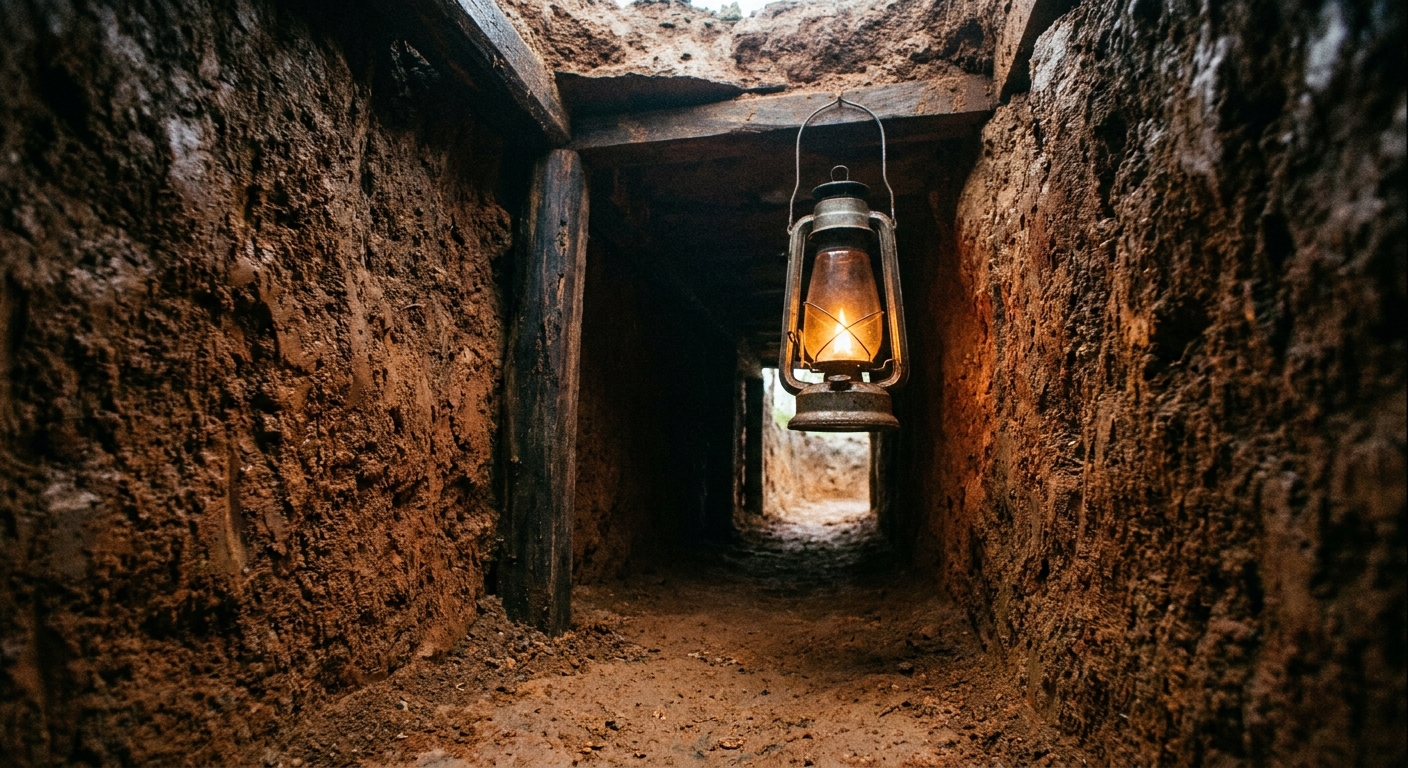
Most travelers arriving in Ho Chi Minh City gravitate toward the Ben Dinh section of the Cu Chi tunnel network. It is undeniably convenient, sitting only an hour or so from the city center, but it often feels more like a theme park than a historical site. Between the crowded firing ranges and the bottleneck of tourists shuffling through narrow subterranean corridors, the gravity of this place can get lost in the noise. For a more authentic, somber, and spacious experience, you need to head another twenty kilometers north to the Ben Duoc tunnels. This is the Cu Chi quiet side, where you can actually hear your own footsteps echoing against the packed earth.
The Ben Duoc tunnels served as the headquarters for the Party Committee and the Military Command of the Saigon-Gia Dinh region during the war. Because of its strategic importance and distance from the city, the area remained largely untouched by the heavy tourist traffic that defines the southern reaches of the network. Walking through the forest here feels heavy with history. You are not jostling for position to snap a photo in a cramped entrance; you are walking through the jungle canopy that once hid thousands of people from aerial bombardment. If you are preparing for your trip, remember that while you should check your Vietnam visa status details well in advance of your flight, the actual journey to Ben Duoc requires nothing more than a bit of patience and a reliable ride.
Finding Reflection in the Jungle
The most striking difference at the Ben Duoc site is the Ben Duoc Memorial Temple, an architectural marvel that sits above the tunnels. Dedicated to the soldiers and civilians who perished in this region, the temple complex is vast, intricate, and deeply moving. Its tiered roofs and ornate, traditional Vietnamese motifs stand in stark contrast to the utilitarian, mud-caked tunnels below. It is a place for quiet reflection, not the hurried chatter of a tour guide megaphone. From the upper levels, you can gaze out over the jungle, getting a sense of the sheer scale of the landscape that the resistance had to work within.

Getting here without a package tour is straightforward if you are comfortable with local transport or private hires. Unlike the standardized trips that start at the crack of dawn, taking your own route allows you to arrive after the tour buses have already made their first pass. You can arrange a private car for a half-day, which grants you the flexibility to linger at the memorial or spend extra time exploring the deeper, less-visited tunnel sections. Alternatively, public buses run toward Cu Chi, though they require a bit more planning. Whether you choose to ride in comfort or navigate the local bus lines, the extra distance acts as a natural filter, keeping the crowds at bay.
When you are planning your itinerary, consider how the visit fits into your larger exploration of the country. Just as you might seek out the stillness of a tranquil valley homestay in Mai Chau to escape the chaos of Hanoi, choosing the Ben Duoc tunnels over the more popular sites provides a necessary change of pace. It allows for a more contemplative interaction with Vietnam’s history. You will find that the local vendors here are less pushy, the walking paths are less manicured, and the air feels just a little bit thinner and more sacred.
Before you set out for the day, keep a few logistical notes in mind to ensure your experience remains as smooth as possible:
- Wear sturdy, breathable footwear; the jungle floor can be slippery and uneven near the tunnel entrances.
- Carry a small flashlight, as the lighting inside the tunnels is minimal and adds to the immersive intensity of the experience.
- Pack a light rain shell, even if the sky looks clear, as the jungle climate near the Saigon River is famously unpredictable.
- Bring insect repellent, as the thick vegetation surrounding the historical site is home to its fair share of mosquitoes.
Once you emerge from the tunnels back into the humid, bright air of the memorial grounds, you will understand why the detour was necessary. The ben duoc tunnels offer a visceral connection to the past that is hard to replicate in more commercialized environments. It is a place where you can stand in silence, look up at the soaring architecture of the temple, and contemplate the resilience of the people who inhabited this land. By bypassing the crowded hubs, you are not just seeing a historical site; you are witnessing a side of the Cu Chi tunnels that remains as quiet and resilient as the history they hold.