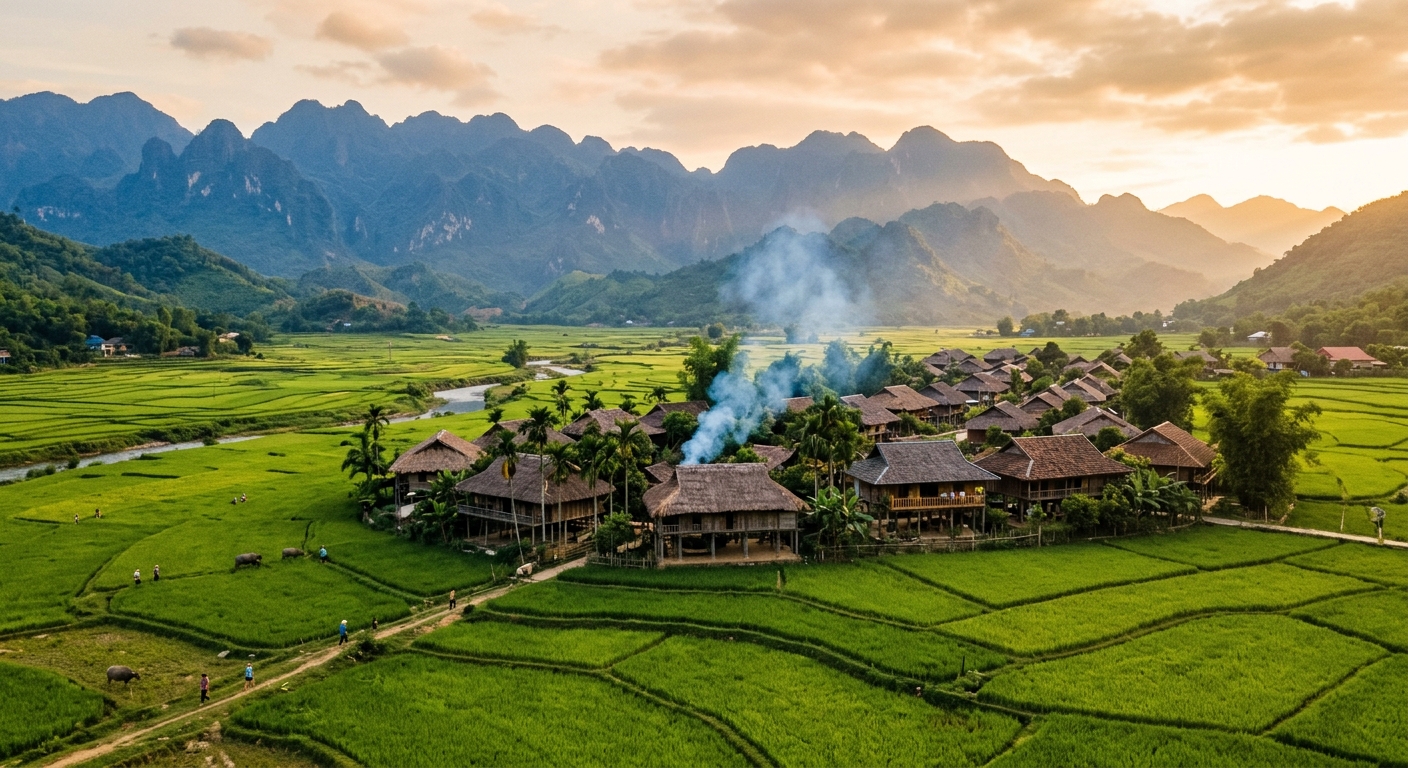
The minivan pulls away from the frenetic, horn-blaring arteries of Hanoi, and within ninety minutes, the landscape shifts dramatically. Gone are the concrete monoliths and the tangled web of overhead power lines. In their place, limestone karsts begin to swell from the earth like sleeping prehistoric giants. The journey to the Hoa Binh province is a masterclass in topographical transition, culminating in the descent down the Thung Khe Pass. As the bus winds down the switchbacks, the valley opens up below, a vast, emerald-green quilt of terraced paddies stitched together by dirt footpaths and bamboo groves.
For those looking to escape the capital, a Hanoi day trip valley excursion can feel like a rush, but arriving here, you realize that two hours is just enough distance to leave the chaos behind. Mai Chau is the antithesis of the frantic energy found in the Old Quarter. It is a place where the rhythm of life is dictated not by a smartphone alarm, but by the agricultural cycle and the descent of the sun behind the ridgeline.
Living Among the Stilt Houses of Lac Village
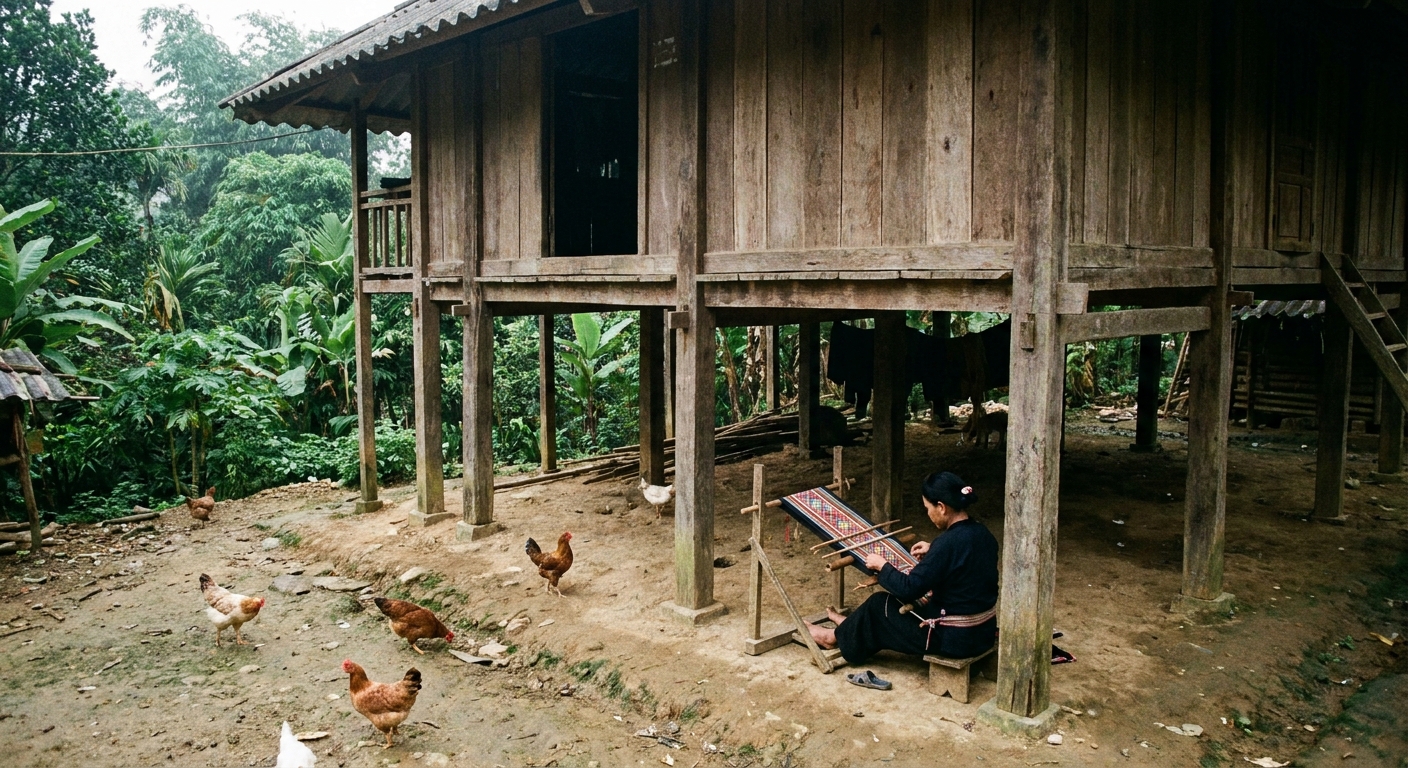
Upon arrival, you are greeted by the architecture that defines this region: the traditional stilt houses of the White Thai people. These structures are built on high wooden pilings, originally designed to protect families from wild animals and the damp soil of the lowlands. Today, they serve as the backbone of local hospitality. Staying in a authentic Mai Chau homestay is not merely a lodging choice; it is an invitation into a domestic space that has remained largely unchanged for generations.
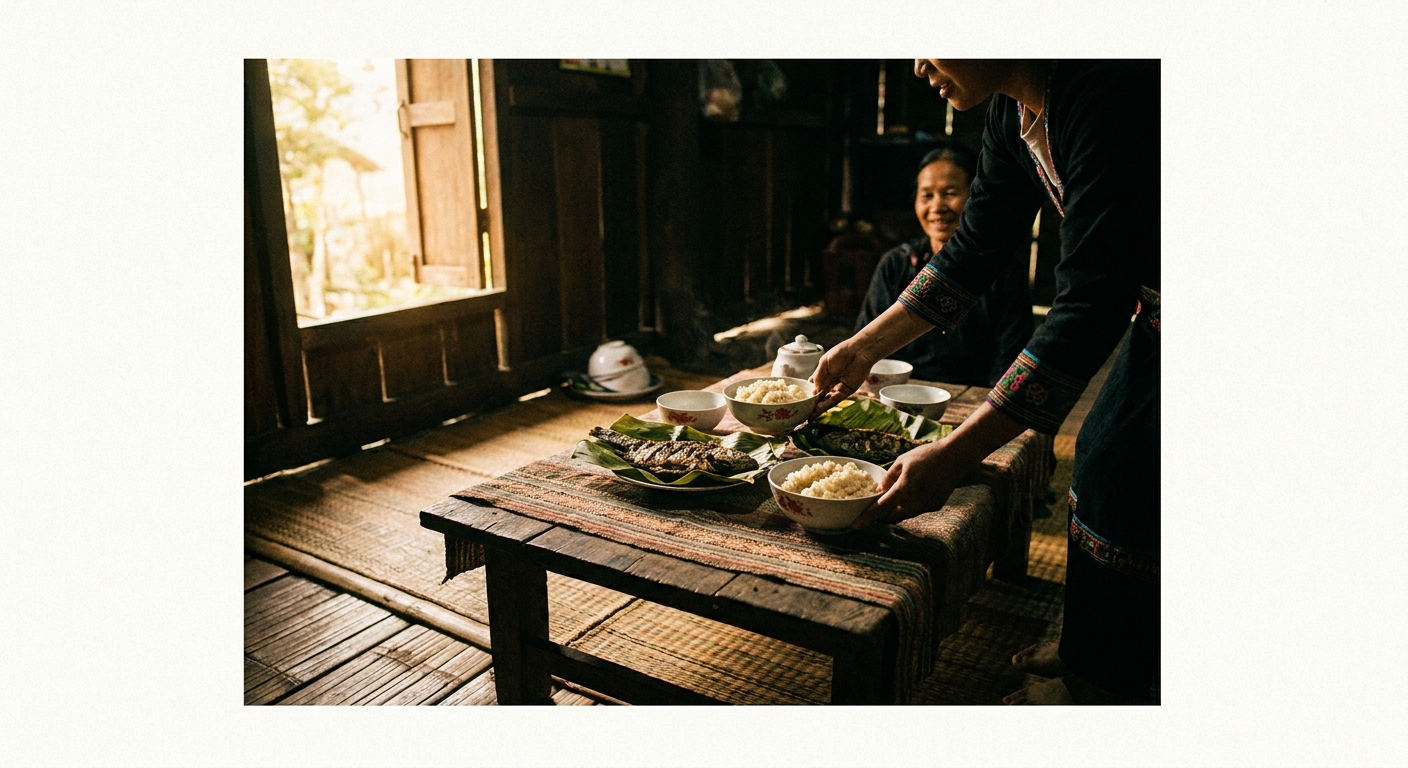
Most of the homestays are concentrated in the villages of Lac and Pom Coong. You will find yourself sleeping on a thick mattress laid directly on polished wooden floorboards, draped under a mosquito net that sways slightly in the evening breeze. The windows remain open, allowing the scent of wet earth and lemongrass to drift in. Life here is communal. In the evenings, your hosts may offer a shot of potent corn wine, a tradition that serves as the social lubricant for conversations that bridge the language gap through smiles and hand gestures.
If you time your visit during the rice harvest—typically occurring in May and October—the valley is at its most kinetic. The air thickens with the scent of drying grain, and the entire community moves in concert to bring in the crop. It is a labor-intensive, visual spectacle where the gold of the rice contrasts sharply against the dark, jagged backdrop of the mountains. Watching the locals navigate the narrow mud dikes with heavy bundles of stalks makes you realize exactly how much physical grace is required to sustain this landscape.
The intimacy of the rural experience, however, comes with a stark wake-up call. Urbanites often romanticize the serenity of the countryside, forgetting that nature has its own volume control. You will not need an alarm clock in the valley. The local rooster—a bird whose lungs seem reinforced with industrial-grade steel—usually begins his duties around 4:30 or 5:00 in the morning. It isn’t a gentle crow; it is an aggressive, persistent proclamation of existence that echoes off the limestone cliffs, ensuring that every soul within a three-mile radius is fully aware that dawn is approaching.
Beyond the rooster’s dawn chorus, the practicalities of a visit remain refreshingly simple. You should pack a few essentials for your time in this White Thai village:
- A light sweater, even in warmer months, as the valley temperature drops quickly once the sun dips below the mountains.
- Sturdy walking shoes or sandals with good grip, as the village paths turn to slick, soft mud after a sudden tropical downpour.
- A small amount of cash in Vietnamese Dong, as digital payment infrastructure is still sparse compared to Hanoi’s coffee shops.
- A portable power bank, as intermittent grid maintenance can occasionally result in localized, short-lived outages.
Cycling remains the best way to explore the peripheries of the valley. You can rent a bike for a pittance and weave through the paddies, where buffalo graze with an air of profound indifference to your presence. The further you pedal from the main cluster of homestays, the quieter the trails become. You might pass children walking home from school in their uniforms or farmers tending to vegetable patches, their work punctuated by the quiet clacking of irrigation wheels turning in the stream.
Returning to Hanoi after a few days in the valley can be a jarring sensory experience. The transition back to the exhaust fumes and the relentless hum of motorbikes is immediate. Yet, the memory of that quiet morning air, the sight of the gold-hued rice fields, and the echo of the local wildlife serves as a necessary anchor. In a country that is modernizing at a breakneck pace, these pockets of traditional life aren’t just tourism destinations; they are quiet reminders of the country’s slower, more deliberate heartbeat.