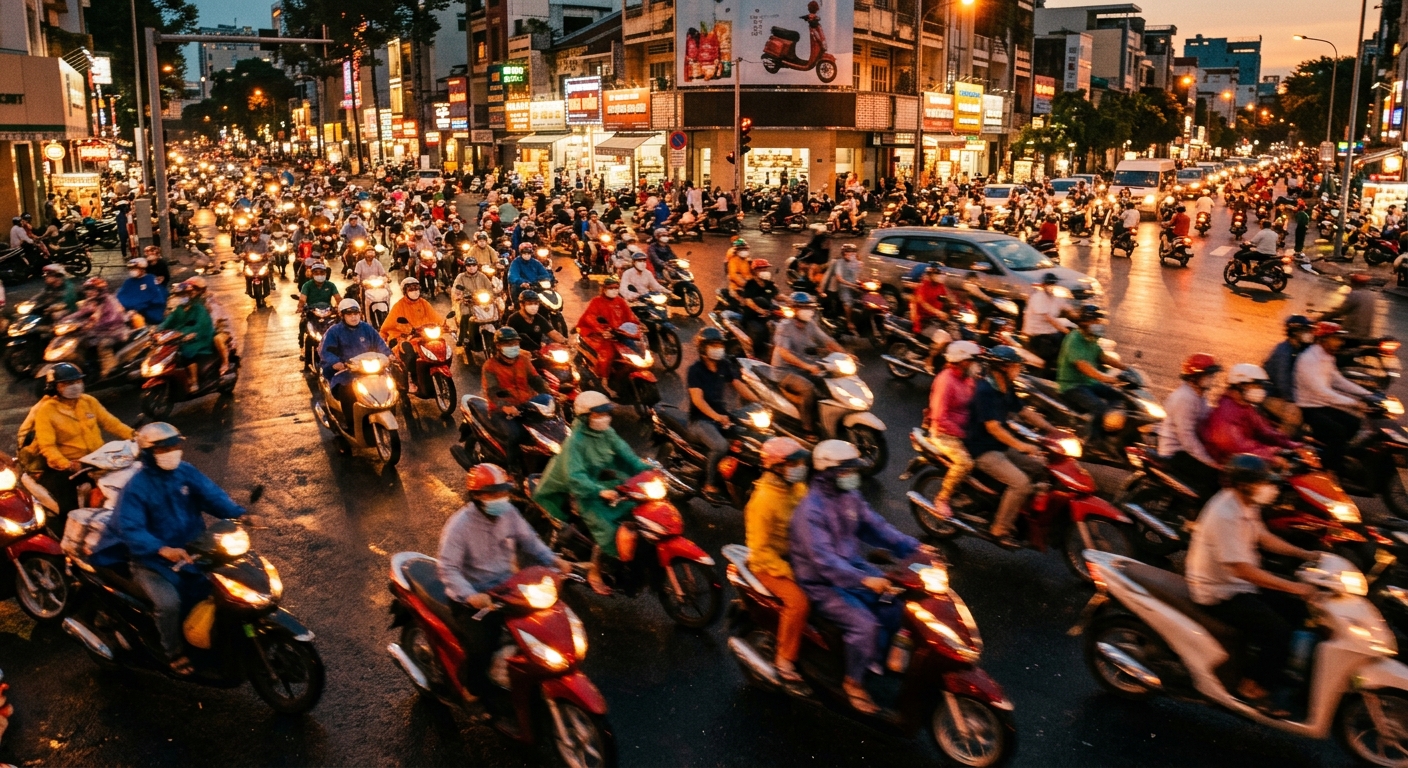
The first time you stand at a curb in District 1, the motorbikes look like a swarm of angry hornets. They don’t stop. They don’t slow down. They weave, they accelerate, and they occupy every inch of asphalt between you and the opposite sidewalk. If you are waiting for a gap in traffic, you might be standing there until the next lunar eclipse. In the chaotic ballet of crossing the street in Saigon, the golden rule is counterintuitive: you have to walk into the madness.
The Physics of Flowing Traffic
To an outsider, the traffic seems like a disorganized riot, but there is a strange, liquid logic to it. Motorbikes move like water around a boulder. When you step off the curb, you become the boulder. If you stand perfectly still, the swarm treats you as a static obstacle and adjusts their trajectory accordingly. If you move erratically, jump back, or stop halfway, you break the flow and confuse the riders. The goal is to move at a slow, consistent pace, like a leisurely stroll through a park. You signal your intent with your body language, keep your eyes forward, and maintain a predictable speed.
Watching a local resident cross a busy thoroughfare is a masterclass in calm. They don’t make eye contact with the drivers, nor do they look for a break in the traffic—because such a thing doesn’t exist. They simply step off the curb, raise one hand slightly as if to say, “I am here,” and maintain a steady, unhurried gait. The motorbikes peel away, passing inches behind their heels or gliding in front of them without even touching the brakes. It feels like an act of faith the first time, but you quickly realize that the drivers are paying much closer attention to you than you think.
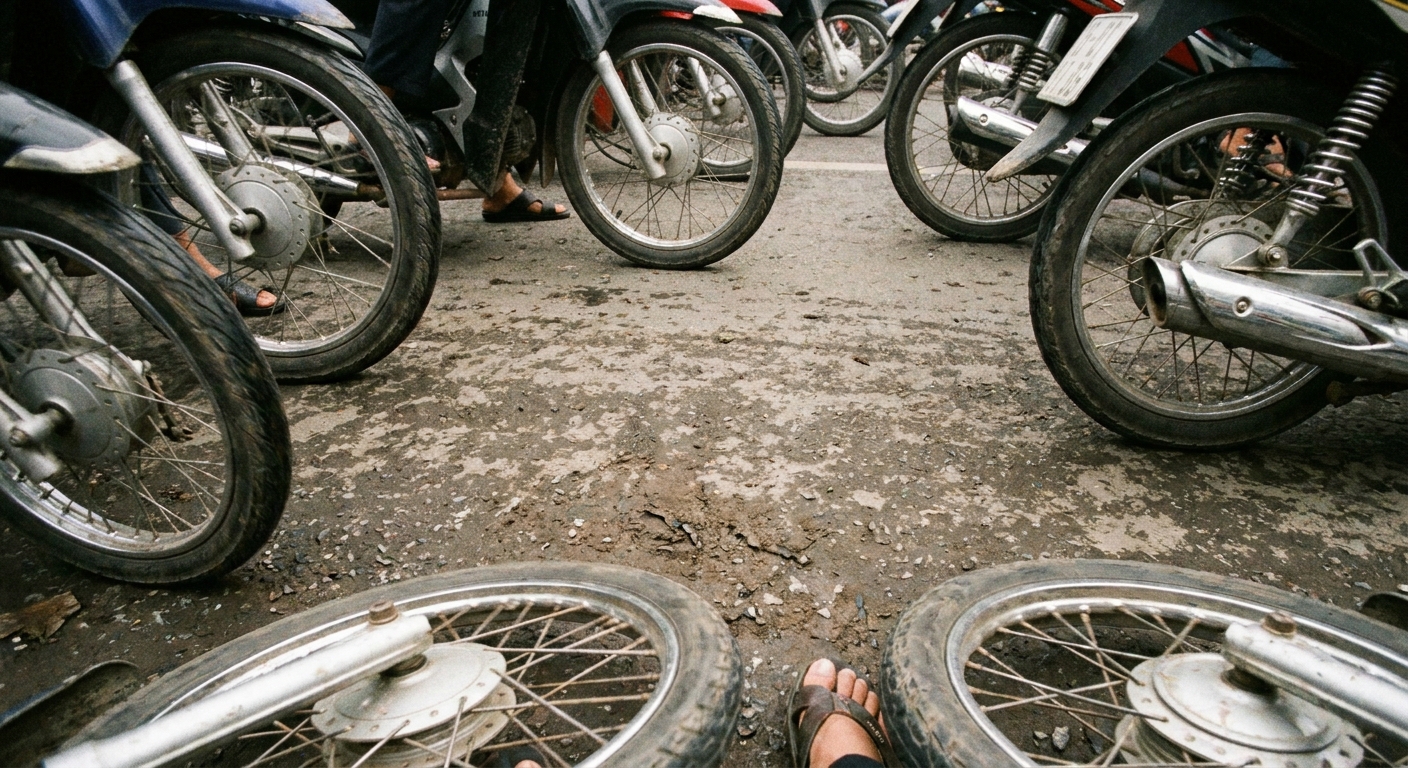
If you find the prospect of walking into a literal sea of scooters daunting, here are the core principles to keep in mind:
- Keep a steady, slow pace so drivers can predict your path.
- Never stop or retreat once you have committed to moving.
- Avoid sudden movements or running, as these startle riders.
- Use the “human shield” method by walking behind a local crossing the street.
Unlearning the Pedestrian Instincts
Back home, we are raised with the idea that traffic is a stop-and-go affair governed by crosswalks and traffic lights. In Ho Chi Minh City traffic, these are merely suggestions rather than absolute laws. Even at marked crossings, you will rarely see a full stop. If you wait for the green light to guarantee your safety, you will find yourself surrounded by motorbikes that have already ignored the red, turning left or right with the same nonchalant efficiency. You must let go of the idea that a crosswalk grants you the right of way; instead, you must claim your space through presence and predictability.
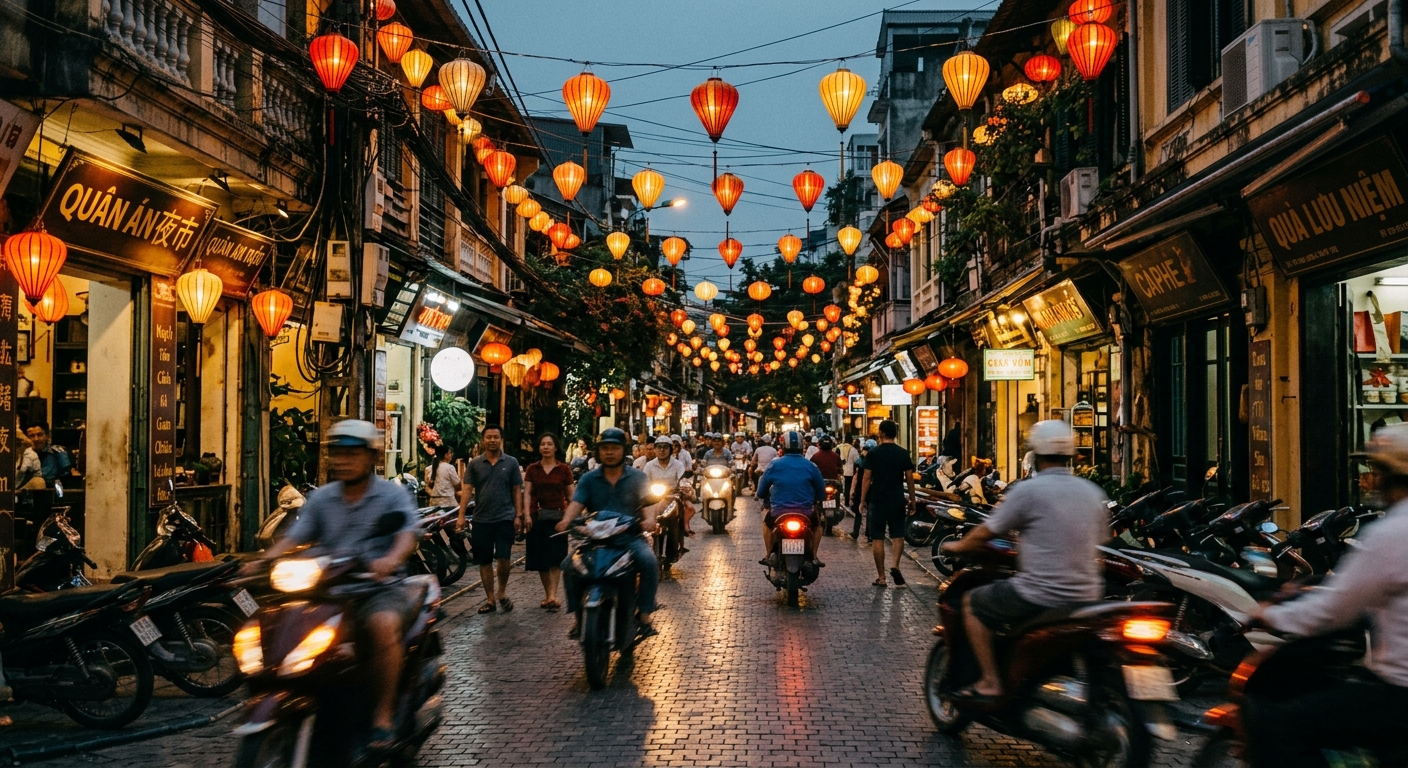
There is also a social contract at play that becomes visible only once you lose your fear. The riders aren’t trying to hit you. They have places to be, deliveries to make, and families to ferry, and their primary objective is to get from A to B as efficiently as possible without damaging their bikes. They view pedestrians as part of the environment, much like a pothole or a stray dog. As long as you don’t surprise them, they will steer around you with millimetric precision. It is a shared responsibility where the burden of safety is distributed equally between the rider and the walker.
Eventually, the adrenaline fades. You stop holding your breath and start noticing the details: the smell of street food wafting from a nearby stall, the sound of engines humming in a low, constant drone, and the way the city pulses with a relentless, rhythmic energy. You will cross a ten-lane road and realize you didn’t flinch once. You’ll step onto the opposite curb, adjust your bag, and keep walking, just another moving part in the beautiful, chaotic machine of the city. By the time you reach your hotel, the fear of the street has dissolved, replaced by a strange sense of belonging to the rhythm of the road.