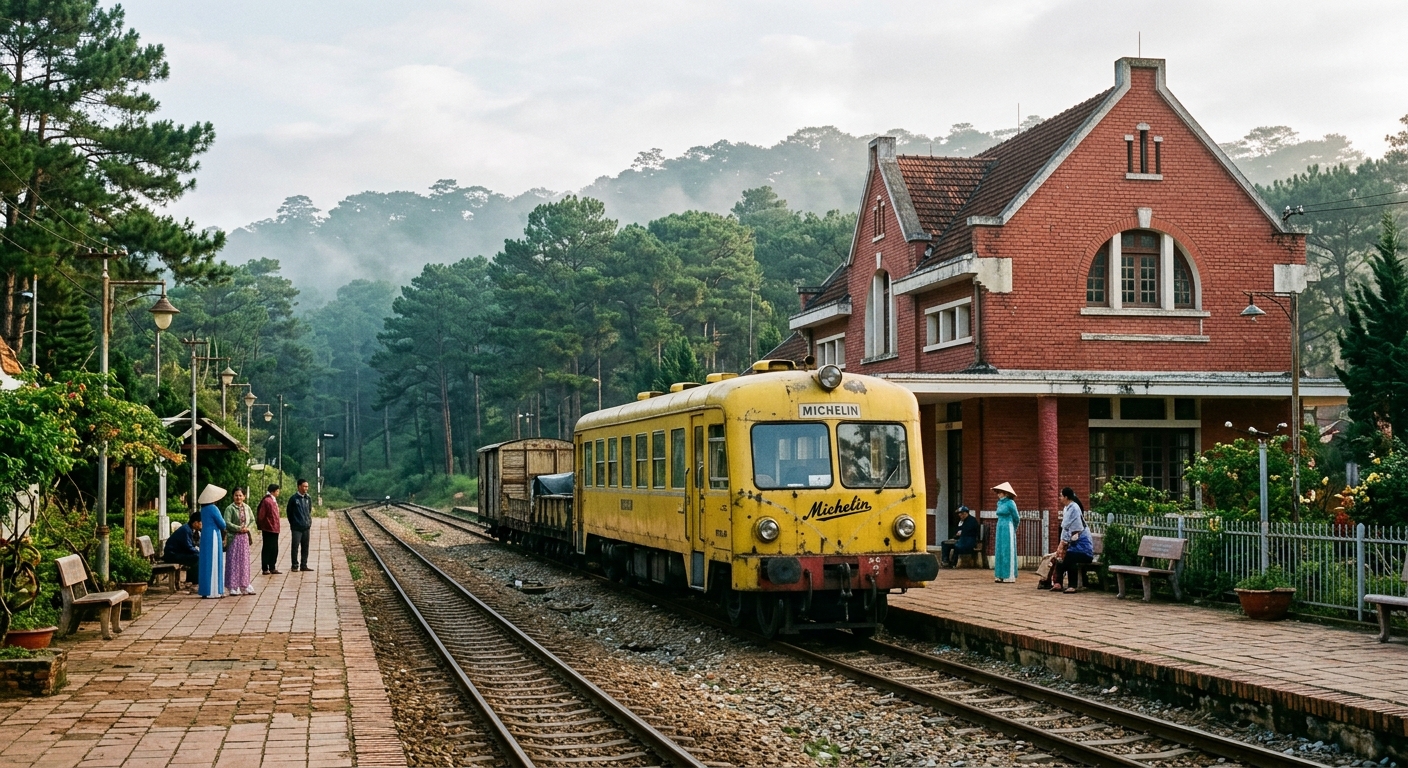
The air in Dalat is different. It carries the sharp, resinous scent of pine needles and a persistent, damp chill that reminds you why the French colonial administrators once retreated here to escape the sweltering lowlands. Among the many architectural remnants of that era, the Dalat train station stands out not just for its Art Deco symmetry, but for its role as the anchor of a forgotten industrial artery. Walking onto the platform, you don’t feel like you are in the tropics; you feel like you have wandered onto a film set where the trains stopped running decades ago, yet the clock is somehow still ticking.
Most visitors come here for the photogenic facade, but the real story is hidden in the shadows of the rusted tracks. This station was once the heart of a daring engineering feat: the Thap Cham to Dalat line. Completed in the 1930s, this 84-kilometer path was a marvel of the vietnam narrow gauge railway system, utilizing a cog-rail system to haul steam locomotives up the steep gradients of the Lang Biang plateau. It was a lifeline for coffee, produce, and people, bridging the gap between the coastal plains and the misty mountain retreat. Today, only a small fragment of that line remains functional, mostly for tourists taking the short ride to the nearby Trai Mat village, but the echoes of the old heavy-freight days are still palpable if you stand quietly by the retired engines.
A Journey Back to the Micheline Era
The crown jewel of the dalat train station museum—if you can call this open-air collection of artifacts a museum—is the restored Micheline rail-car. It is a surreal, elegant machine, characterized by its pneumatic rubber tires that allowed it to run silently and smoothly on steel rails. Looking at its narrow, polished body, it is easy to imagine the quiet sophistication of travel in the mid-20th century. While the steam locomotives get the attention for their sheer size, the Micheline is a reminder of a time when the journey to the mountains was as much about style as it was about logistics. It sits in a state of preserved stillness, a vintage relic that feels completely out of place against the backdrop of modern, buzzing motorbikes just outside the station gates.

If you have recently spent time in the humid, low-lying cities like the coastal hubs near Da Nang at dusk, the temperature drop in Dalat can be startling. It is a place that demands a slower pace. After you have wandered the station grounds and inspected the ironwork of the old carriages, step out and walk into the surrounding streets. This part of Dalat is a masterclass in colonial urban planning. The roads curve gracefully around the contours of the hills, lined with yellow-washed villas and overgrown gardens that seem to be reclaiming the concrete.
You will notice that the streets here are significantly quieter than those in Saigon or Hanoi. There is a sense of isolation that feels intentional. As you explore, keep an eye out for these local details:
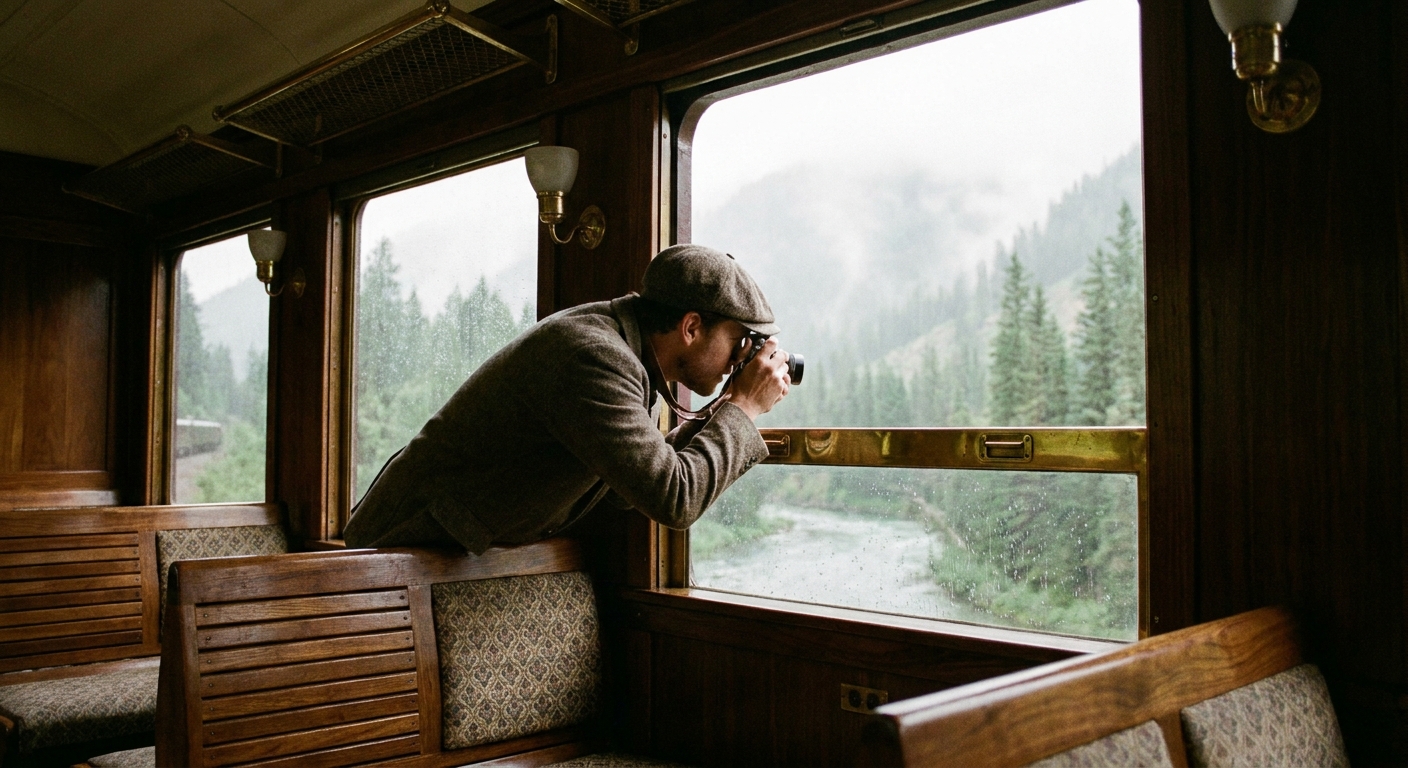
- The crumbling Art Deco windows on residential villas hidden behind pine trees.
- Small, makeshift stalls serving hot soy milk and grilled rice paper, the quintessential Dalat snack.
- Terraced vegetable farms that begin appearing as the city architecture gives way to the countryside.
- The steep, winding staircases that connect the higher residential neighborhoods to the valley floor.
Navigating these streets is the best way to understand why the French chose this specific spot for their mountain hideaway. It shares a certain melancholic beauty with the rainy, stone-walled corridors of the central provinces. Much like the experience of Hue’s imperial city in the rain, there is a distinct charm in watching the mist roll over the hills while you walk through a landscape defined by its history rather than its modernity. The dalat heritage is not just in the train station, but in the way the city clings to the hillsides, keeping its secrets under the canopy of pine.
As the light fades, the station takes on a different character. The wood-paneled waiting rooms glow with an amber warmth, and the long shadows of the tracks stretch toward the mountains, tracing the ghost of the line that once connected this cool, high-altitude sanctuary to the rest of the country. Whether you are a rail enthusiast or simply someone looking for a quiet corner to decompress, this site offers a rare moment of stillness in an otherwise rapid-fire travel itinerary. You leave with the scent of pine on your jacket and a slightly clearer understanding of how this remote mountain station helped define the character of the Central Highlands.