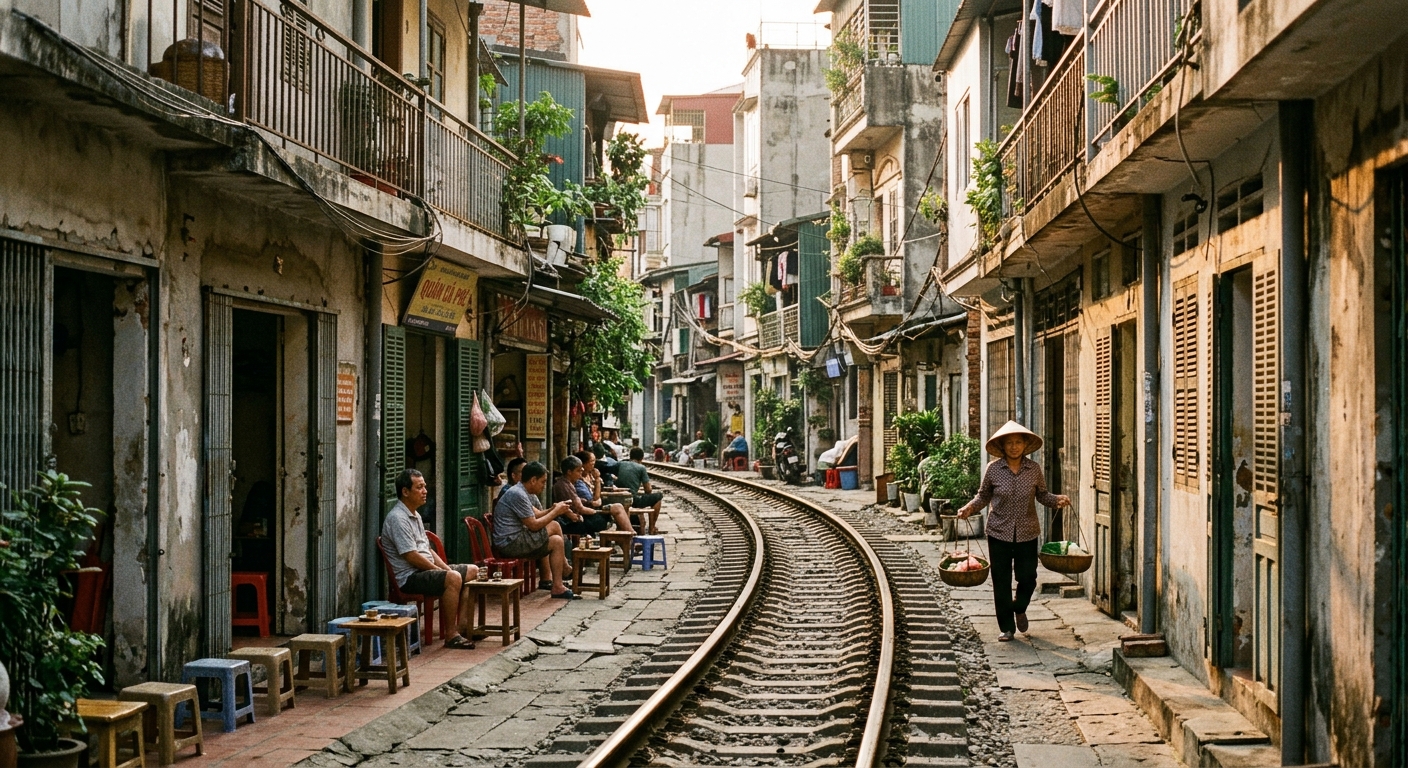
The smell of strong robusta coffee hangs heavy in the humid air of Hanoi’s Old Quarter, mixing with the metallic tang of iron rails that have been polished smooth by a century of steel wheels. For years, the narrow alleyway of Hanoi train street was the quintessential Instagram pilgrimage. Tourists would lean perilously over the tracks, selfie sticks extended, waiting for the massive locomotives to rumble inches from their chests. It was chaotic, dangerous, and undeniably thrilling. Today, the atmosphere is markedly different, defined by metal barriers, watchful local authorities, and a newfound sense of order that prioritizes safety over the perfect shot.
Walking toward the tracks now, you are met by uniformed police officers stationed at the street’s entrance. The days of wandering freely along the sleepers, balancing on the metal, are gone. These checkpoints are not there to ruin your vacation, but to stop the erratic behavior that once threatened the lives of both visitors and the local residents who call these narrow row houses home. If you approach with a respectful demeanor, however, you will find that the street is not completely closed. It has simply transitioned from a free-for-all public thoroughfare into a curated, cafe-driven experience.
Respecting the New Boundaries of the Tracks
To enter the restricted zone, you must be a patron of one of the remaining cafes. The unofficial protocol has shifted toward a more controlled interaction. You will likely be approached by a cafe owner who will usher you behind the safety line—usually a thin strip of rope or a marked boundary on the ground—and offer you a seat. This is the new reality of the hanoi train street; you are now a guest on private property rather than an explorer in a public alley. While the dynamic feels more transactional, it also provides a quiet, authentic perspective on how the locals live alongside the thundering schedule of the Vietnam Railways.
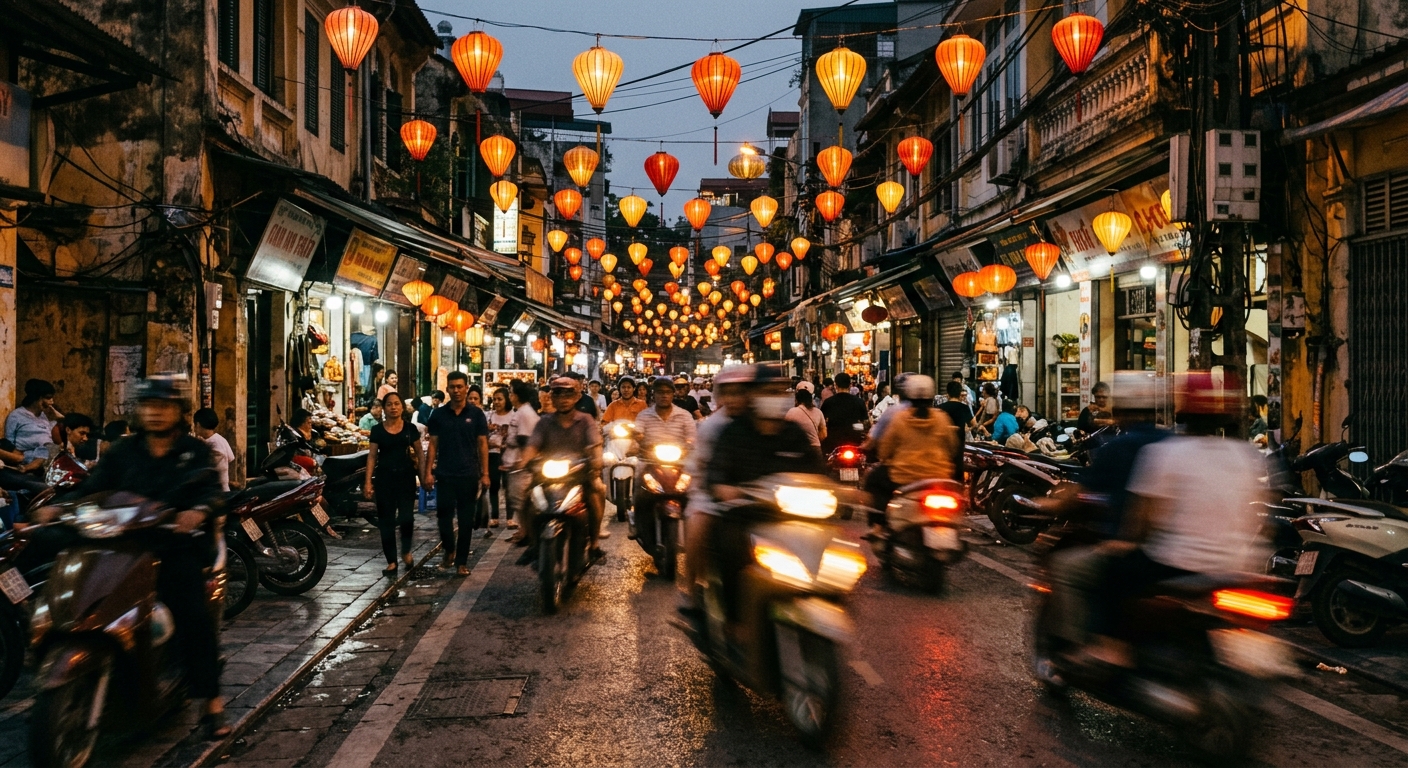
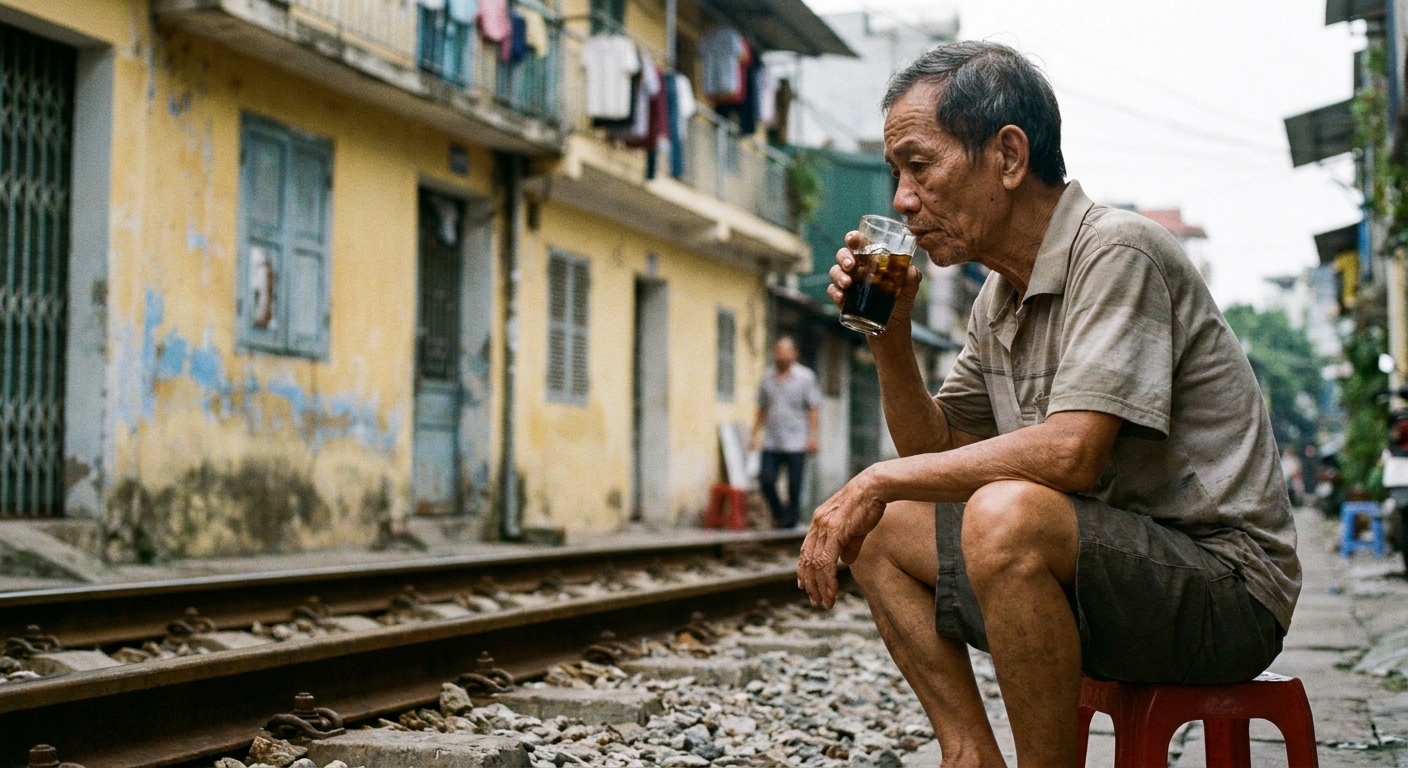
Following the current train street cafe rules is essential if you want to avoid being turned away. The authorities are strict about loitering, and they do not tolerate those who attempt to bypass the checkpoints to gain unauthorized access to the tracks. Your presence must be tied to a specific business. Once you are seated with a glass of iced coffee, the experience becomes surprisingly tranquil. You aren’t jostling for space with hundreds of other travelers anymore. Instead, you are sitting in the shade of a vibrant, narrow wall, listening to the muffled sounds of the city outside while the tracks sit quiet, waiting for their next shift.
There is a unique rhythm to this experience that is often lost when tourists treat the location like a theme park. Sitting there, you notice the details you might have missed before:
- Laundry lines strung carefully between buildings above the tracks.
- Children playing with toys just feet away from the iron rails.
- The methodical way cafe owners tuck their furniture back to ensure clearance for the passing train.
- The sudden hush that falls over the cafe when the whistle sounds in the distance.
When the train eventually arrives, the experience is still visceral. You do not stand on the tracks. You stay firmly behind the designated line, camera in hand, as the massive blue-and-yellow engine passes with a deafening, rhythmic clatter. It is a moment of pure, focused energy. You feel the vibration in the floorboards of the cafe and the sudden wind as the cars whip past. It is enough to make your heart race, yet it feels controlled, safe, and profoundly local.
The beauty of this version of Hanoi is that it forces you to slow down. You can no longer rush through, snap a photo, and leave. You have to commit to a seat, order a drink, and wait. You engage with the shop owners and observe the daily life that continues long after the tourists have left. By respecting these boundaries, you ensure that this fascinating intersection of modern transportation and historical living continues to exist for the next generation of travelers. As the train fades back into the landscape, the street returns to its quiet, humid hum, and you realize that seeing it from behind a cafe table offers a far deeper connection than standing on the tracks ever could.