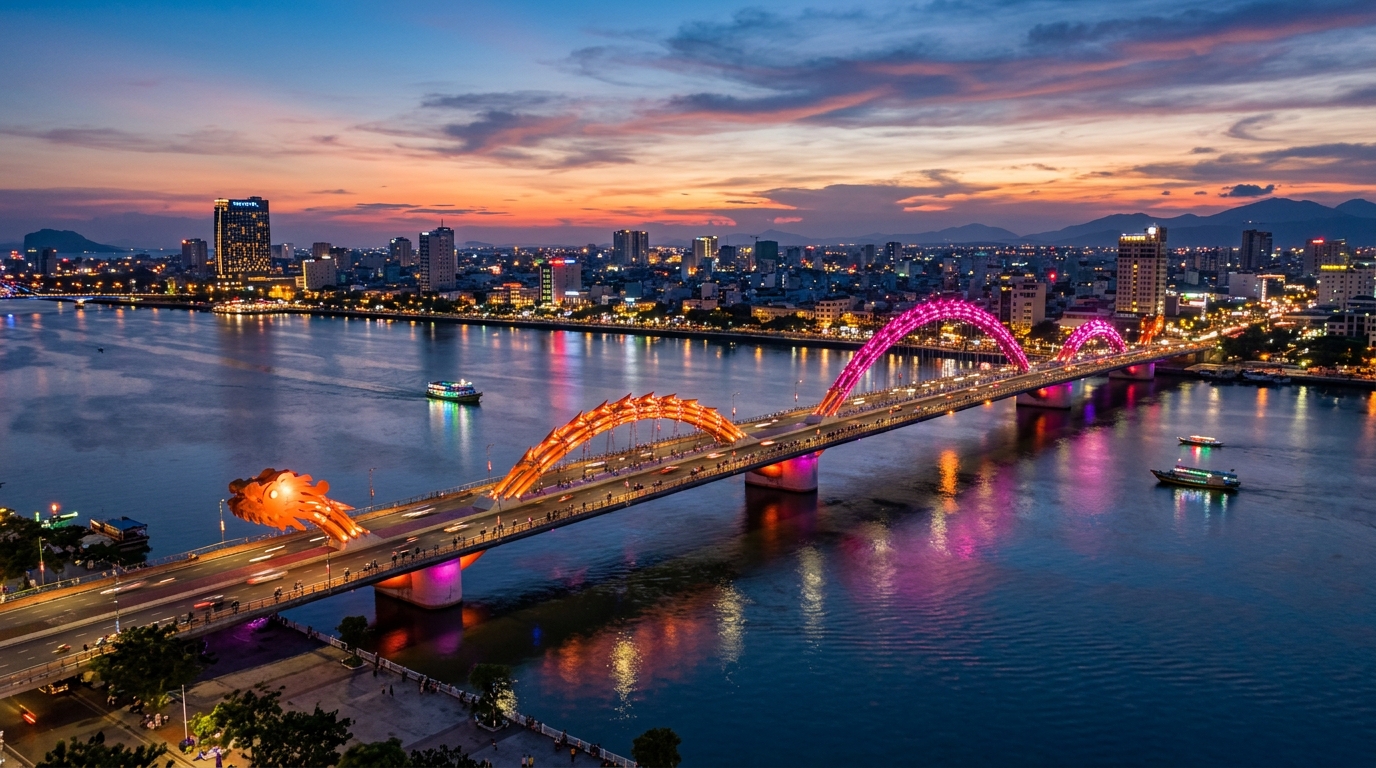
The humidity in Da Nang begins to break right around 5:30 PM. As the sun dips behind the Truong Son mountains, the air loses its biting edge, replaced by a gentle breeze rolling off the South China Sea. This is the golden window for a My Khe beach walk. While most tourists spend their afternoons tethered to beach chairs, the local rhythm of the city starts to pulse as the light wanes. You’ll see the early shift of fishermen beginning to ready their circular bamboo baskets, their silhouettes framed against the darkening horizon as the first neon signs of the beachfront hotels flicker to life.
Walking from the sand toward the city center requires leaving the salt spray behind and heading west, cutting through the grid of streets toward the Han River. The transition is subtle. The roar of the ocean is replaced by the relentless, rhythmic hum of thousands of motorbikes weaving through the intersections. It’s a sensory shift that defines Da Nang: a city that is simultaneously a coastal resort and a hard-working industrial hub. As you march toward the river, the sky turns a deep, bruised purple, and the city’s concrete skyline begins to glow with an electric intensity.
Chasing the Neon Glow Along the Han River
Reaching the riverbank, the Han River evening comes alive with a completely different energy. The riverfront promenade is the city’s front porch. Families gather on plastic stools to sip iced coffee, children chase one another around the statues, and the occasional busker tunes an acoustic guitar. The path here is wide, manicured, and illuminated by strings of fairy lights draped through the trees. From this vantage point, you can look back toward the beach and see the high-rise hotels standing like glowing sentinels, but the real draw is looking toward the bridges.
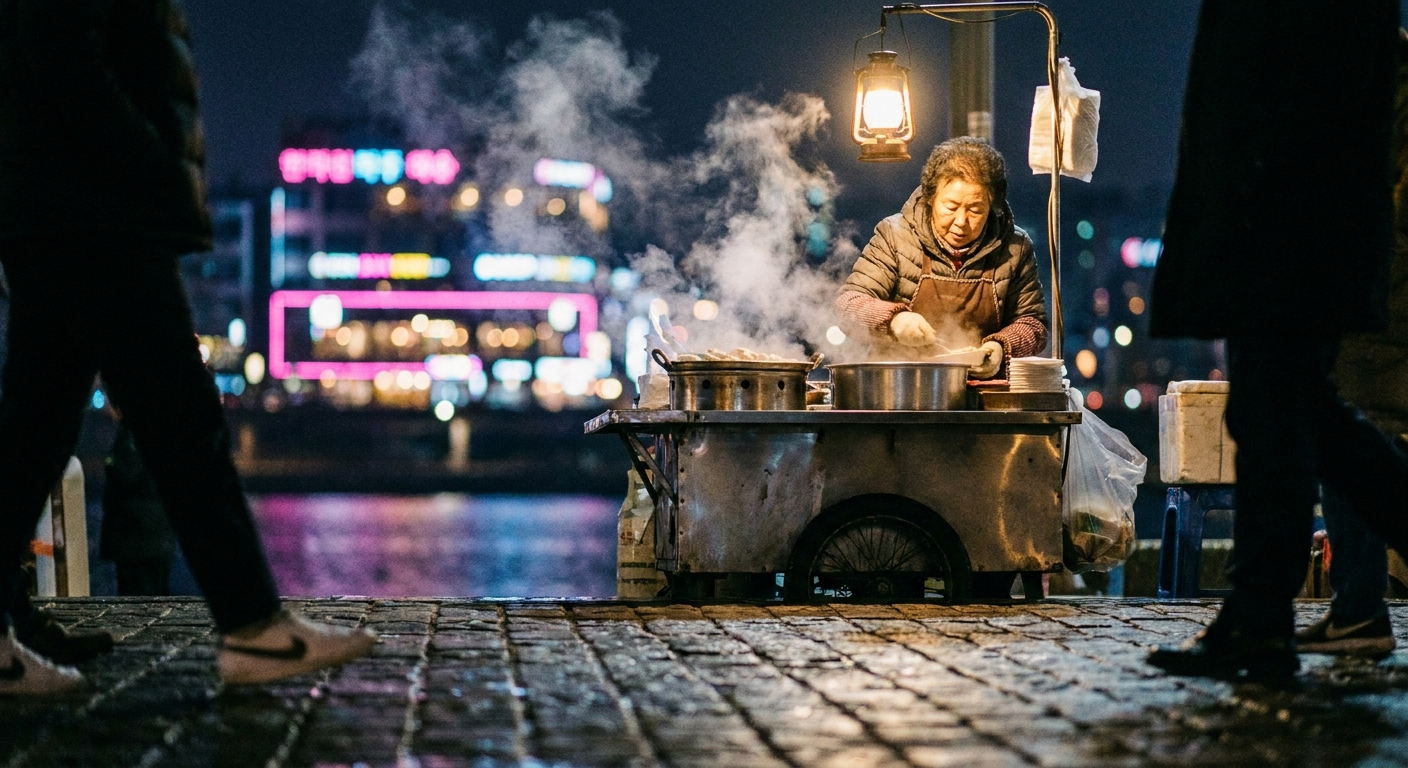
The architecture of Da Nang is defined by its crossings. There is the sleek, modern elegance of the Tran Thi Ly Bridge, with its sail-like structure illuminated in shifting hues, but all eyes eventually turn toward the legendary da nang dragon bridge. Up close, it looks like a piece of industrial art, a massive steel serpent arching over the water. As you walk closer, the bridge shifts colors—pulsing from a cool cobalt blue to a fiery crimson, reflecting beautifully off the dark, moving surface of the Han River. It is a striking visual contrast to the more organic chaos of the city streets you navigated just moments before.
If your walk happens to land on a Saturday or Sunday, you will notice a distinct change in the atmosphere around 8:45 PM. Crowds begin to swell near the base of the dragon. Motorbikes pull over in rows, and tourists jostle for a front-row view of the fire-breathing spectacle. The anticipation is palpable, thick with the smell of exhaust and street food—grilled squid, corn sautéed in butter, and pungent bowls of Mi Quang. It is a genuinely localized event, drawing everyone from grandparents to teenagers looking for a weekend photo op.
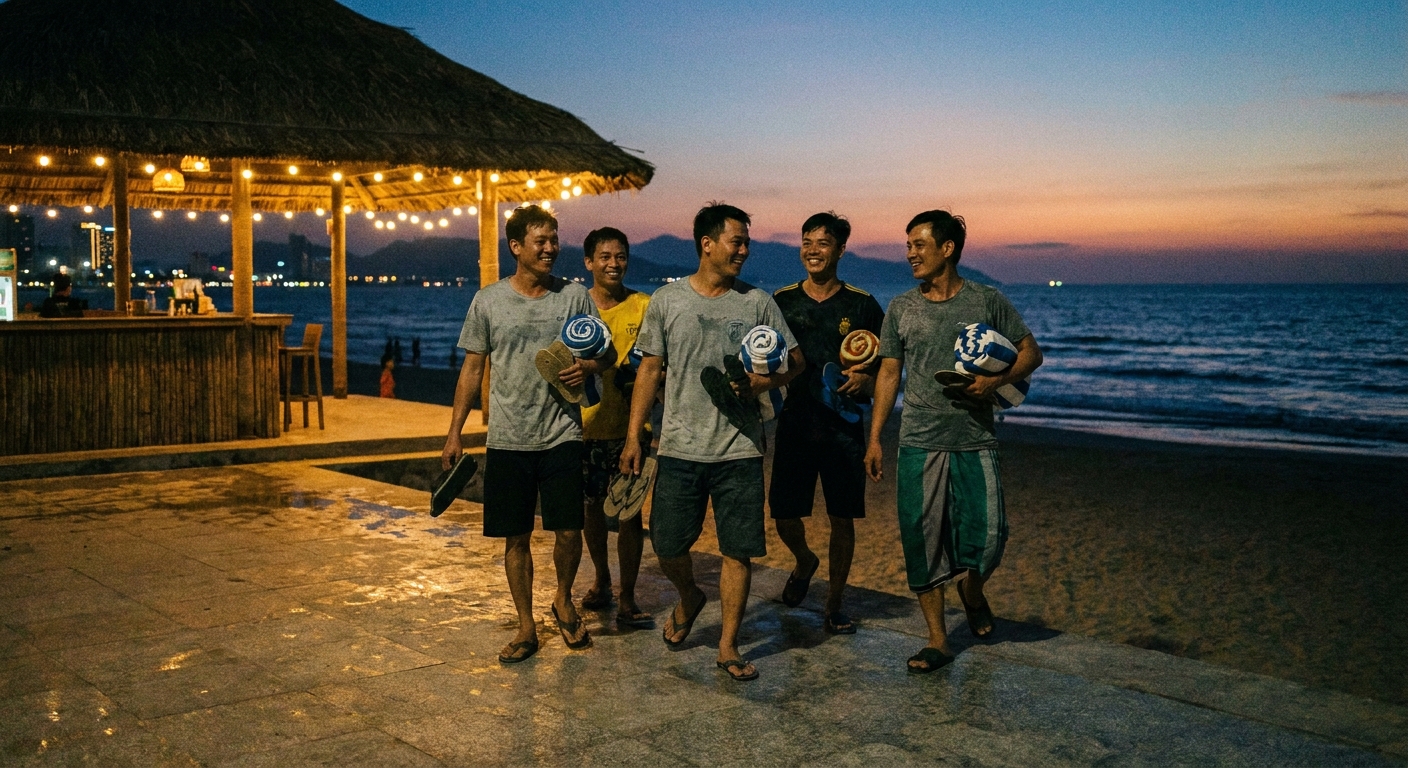
Is the fire show actually worth the wait? If you are looking for high-art performance, perhaps not. It is loud, occasionally chaotic, and lasts only a few minutes. The dragon spits flames, followed by a mist of water that often drenches the unsuspecting front rows. However, there is something undeniably infectious about the collective gasp of the crowd when the fire erupts. It isn’t about the technical quality of the spectacle; it is about the communal energy of a city that knows how to put on a show for itself. If you find yourself in the middle of the throng, embrace the humidity and the noise. If you prefer a quieter perspective, hang back a few hundred meters along the promenade where you can still feel the heat of the flames without getting sprayed by the cooling mist.
After the show concludes, the city doesn’t immediately sleep. Instead, the riverfront settles into a steady, contented hum. The street vendors begin to clear their carts, and the younger crowd drifts toward the nearby cafes for late-night smoothies or bowls of fruit. Walking back toward the hotel district, the transition back to the beach feels like moving through layers of a cake—from the frantic, neon-soaked center back to the quieter, salt-heavy air of the coast. Da Nang is not a city of hidden museums or ancient ruins; it is a city of movement. Walking this path at dusk allows you to see the gears of that movement turning, from the lonely fisherman at the water’s edge to the roaring, fire-breathing pride of the city center.
It is worth noting that this walk is best enjoyed with comfortable shoes rather than flip-flops. While the pavement is mostly smooth, the four-kilometer trek will reveal the unevenness of local sidewalks and the sudden, unpredictable turns of the bike traffic. Keep your eyes up, not on your phone. The best moments in this city—the way the light catches the metallic scales of the bridge or the sudden friendliness of a vendor offering a nod as you pass—happen in the periphery of your vision. Da Nang is a place that rewards those who keep moving, especially when the sun goes down and the city starts to shine.