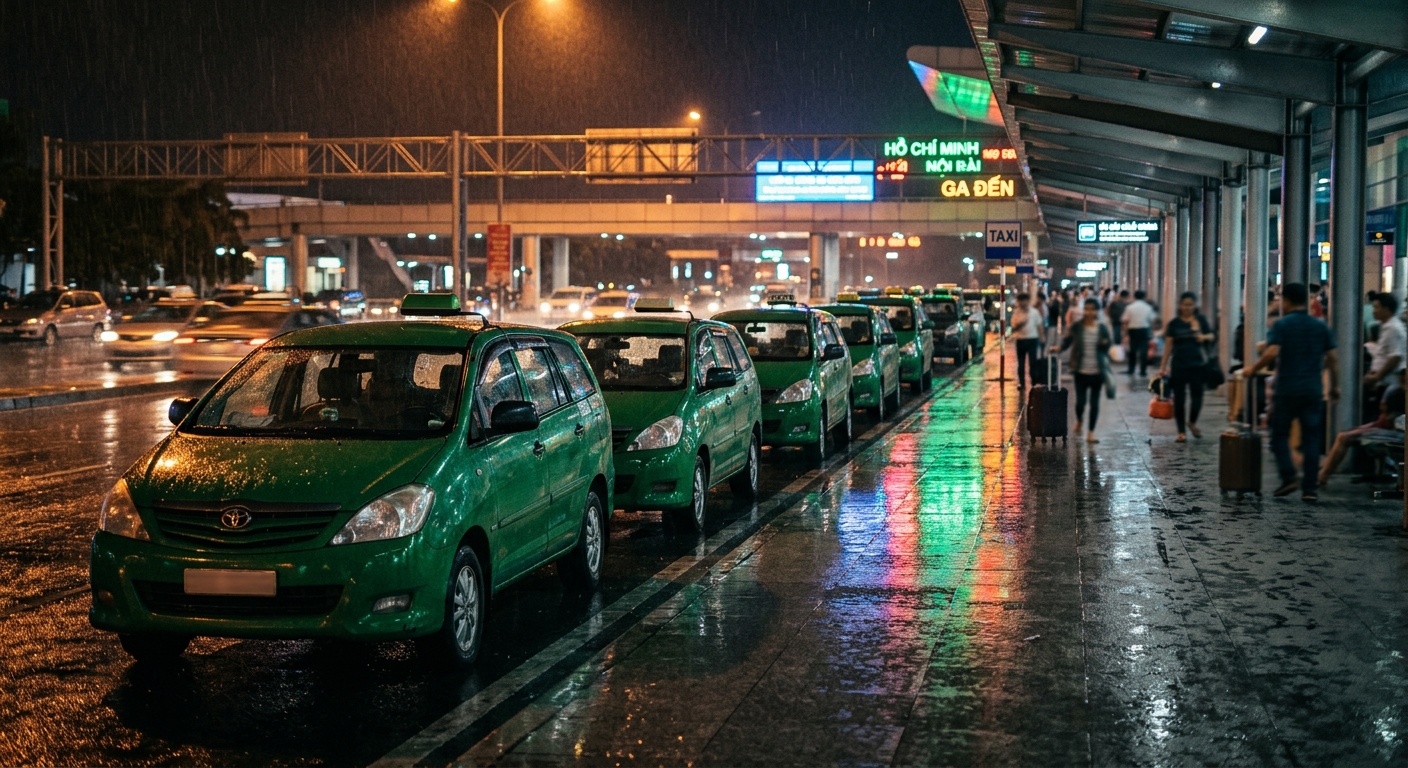
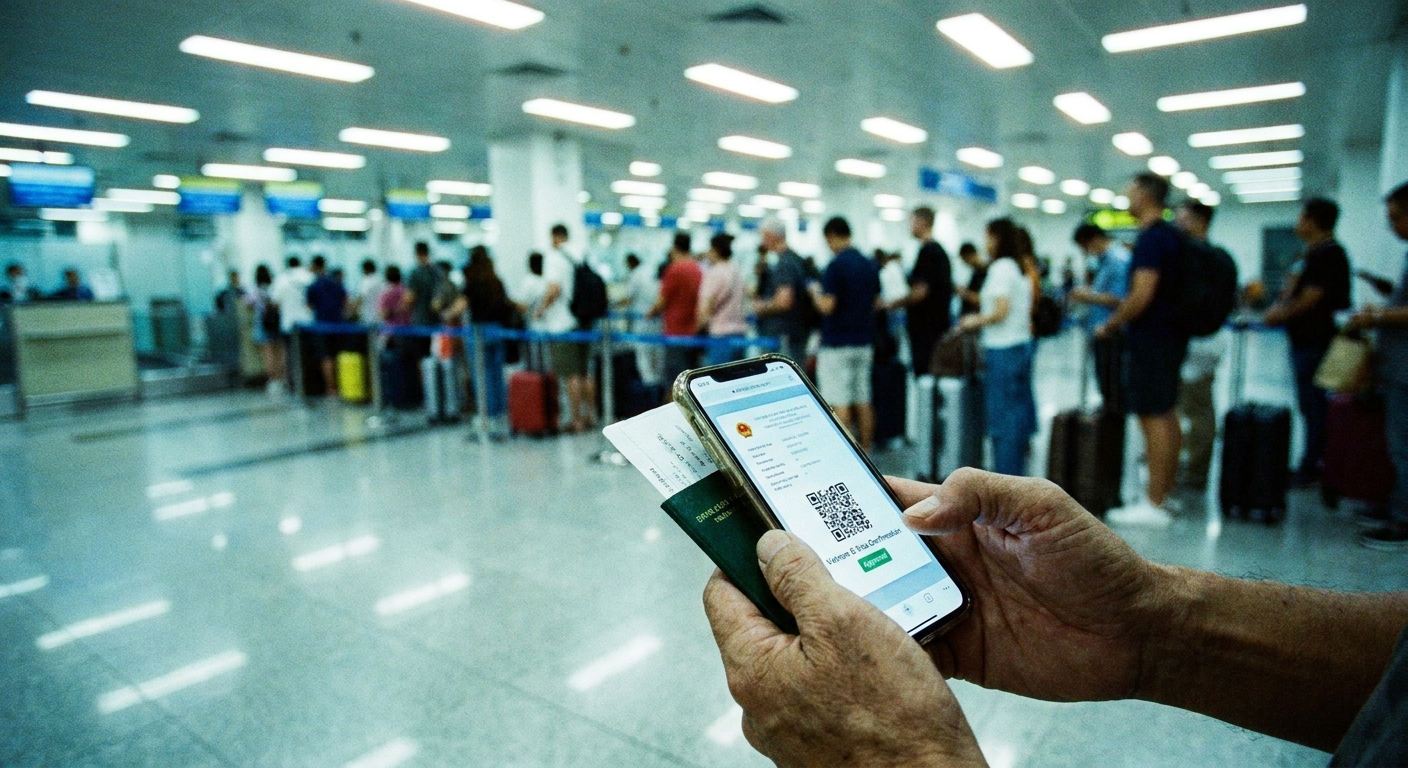
The moment you step out of the arrival hall at Tan Son Nhat (SGN), Noi Bai (HAN), or Da Nang (DAD) airports, the sensory wall hits you: humidity, the hum of idling engines, and a wall of men holding crumpled pieces of paper with names scribbled on them. You have cleared immigration, grabbed your luggage, and survived the initial gauntlet of visa checks. Now, you just want to get to your hotel. The reality of getting a taxi in Vietnam is rarely the polished, organized affair you might find in Singapore or Tokyo; it is a chaotic, slightly aggressive, and entirely functional dance that rewards those who keep their wits about them.
Choosing Your Path Out of the Arrival Terminal
There are three primary ways to leave the airport: the official taxi queues, the app-based car services, and the “freelance” drivers who will try to pull you into their orbit the second you emerge. The official taxi stands at SGN and HAN are clearly marked, and they are generally your most reliable bet if you want to avoid the headache of navigating a digital app while exhausted. At these stands, you will typically see dispatchers in uniform. They will usher you toward the next available car, usually from a reputable company like Vinasun or Mai Linh in the south, or Airport Taxi and Mai Linh in the north. Stick to these names. Ignore the men hovering near the sliding glass doors who whisper about fixed prices or special deals. Those are never, ever deals.
The debate between Grab vs taxi Vietnam is a staple of traveler forums for a reason. Grab, the region’s dominant ride-hailing app, is undeniably convenient because it eliminates the language barrier and the need to haggle. You know the price before you get in, and the route is tracked via GPS. However, airports in Vietnam have become notoriously difficult for Grab drivers. Authorities often restrict where these cars can pick up passengers to prevent gridlock. At Noi Bai, for example, you might find yourself trekking to a specific parking structure rather than the main curb. If you are hauling two giant suitcases in ninety-degree heat, that walk can feel like a marathon. Furthermore, during peak arrival times or heavy rain, the surge pricing on Grab can occasionally inflate the fare to levels higher than what a metered taxi would charge.
If you decide to use an app, be prepared for a bit of digital hide-and-seek. The driver will likely call or message you through the app to confirm your gate number or pillar. If your Vietnamese is non-existent, this can be frustrating. Most drivers will have a basic translation tool ready, but patience is required. Meanwhile, the metered taxis lined up at the official rank operate on a different frequency. They are used to foreigners, and while 99 percent are honest, the old trick of a “broken” meter or an extra “airport toll” is still floating around. Always ask the driver to turn the meter on immediately. If they refuse or insist on a flat rate that feels inflated, walk away. There is always another car.
Here are a few ground rules for keeping your departure from the airport civil:
- Always verify the company logo on the side of the car matches the official taxi stand’s recommended list.
- Keep your hotel’s address written down in Vietnamese on a piece of paper or saved as a screenshot on your phone.
- Never agree to a “fixed price” deal with a driver who approaches you inside the terminal or near the exit curb.
- Ensure the meter is running the moment the wheels start turning; if it isn’t, ask the driver to start it immediately.
The unglamorous truth is that none of these methods are perfect. You might wait in a long queue at the taxi stand, or you might spend twenty minutes pacing the parking garage looking for your Grab driver. Da Nang is perhaps the most relaxed of the three major airports, where the distance from the terminal to the city center is short enough that a taxi driver is rarely incentivized to pull a long con on a tourist. Conversely, at SGN, the sheer volume of traffic can turn a five-mile journey into an hour-long ordeal, meaning the meter will tick upward regardless of your mode of transport.
When you finally reach your destination, check your change carefully before exiting the vehicle. It is common for drivers to claim they do not have change for large denominations, so keep plenty of small bills in your wallet. Do not be surprised if the driver asks for a small tip on top of the fare; while tipping is not deeply ingrained in the culture like it is in North America, it is becoming a standard expectation for ride-share and taxi drivers dealing with international travelers. Once the door clicks shut behind you and the taxi pulls away into the swirling stream of motorbikes and street life, the stress of the airport transit usually evaporates, leaving you to finally start your trip.