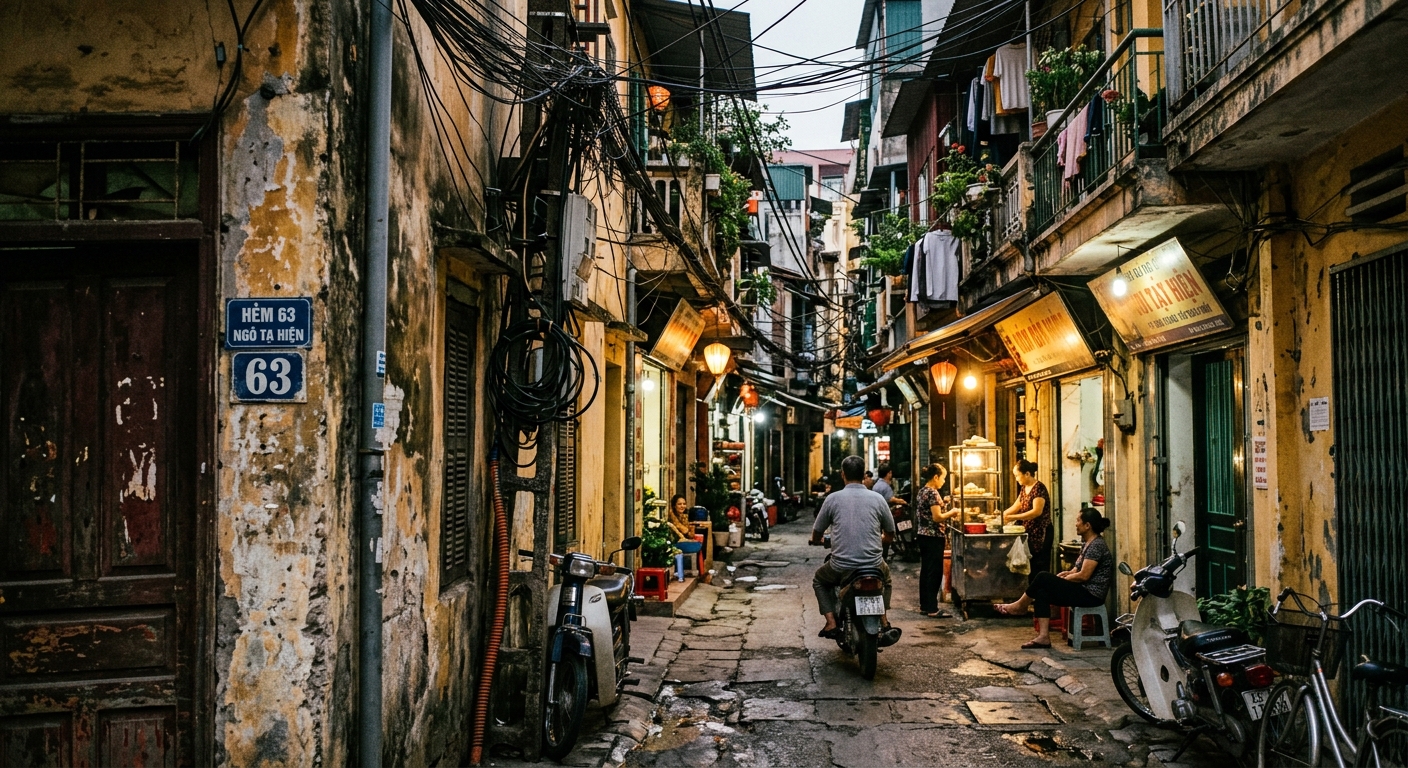
The blue dot on your smartphone screen is dancing around the intersection of a major boulevard in Hanoi, but you are standing in front of a wall of yellow-painted concrete, smelling strong coffee and damp moss. You look at the address written on your booking confirmation, then back at the phone, then at the wall. According to Google Maps, you have arrived. According to the physical reality of the city, you are three houses deep into a labyrinth that doesn’t appear on any digital satellite view. Welcome to the wonderful, slightly maddening reality of finding your way through a Vietnamese city.
The primary source of confusion for first-time visitors is the nature of the “hem,” or alleyway. In Western cities, an address is usually a linear progression along a primary street. In Vietnam, the street name you see on your map is merely the “trunk” of the tree. The real action happens in the branches. Addresses here often look like a mathematical equation: 45/12/3 Nguyen Van Linh. That first number is the street front. The second is the alleyway number branching off that street. The third is the specific house or building deep within that sub-alley. If you attempt to type this into a standard search bar, the system often loses its mind, dropping you at the entrance of the main road and leaving you to wander the spiderweb of corridors alone.
The Geometry of the Hem System
Hanoi alley numbers operate on a logic that feels ancient and organic, developed over decades of rapid, informal urban growth. Houses aren’t always numbered in a simple ascending order; they are numbered based on when they were built or registered. You might find house number 12 sitting directly next to number 88, with number 14 hiding behind a noodle stall two streets over. When you rely on Vietnam addresses google maps data, you are often relying on crowdsourced pins that were dropped by a tired backpacker three years ago. The map thinks it knows where the destination is, but it cannot see the iron gate that was locked at 9:00 PM or the construction project that blocked off the main thoroughfare yesterday.
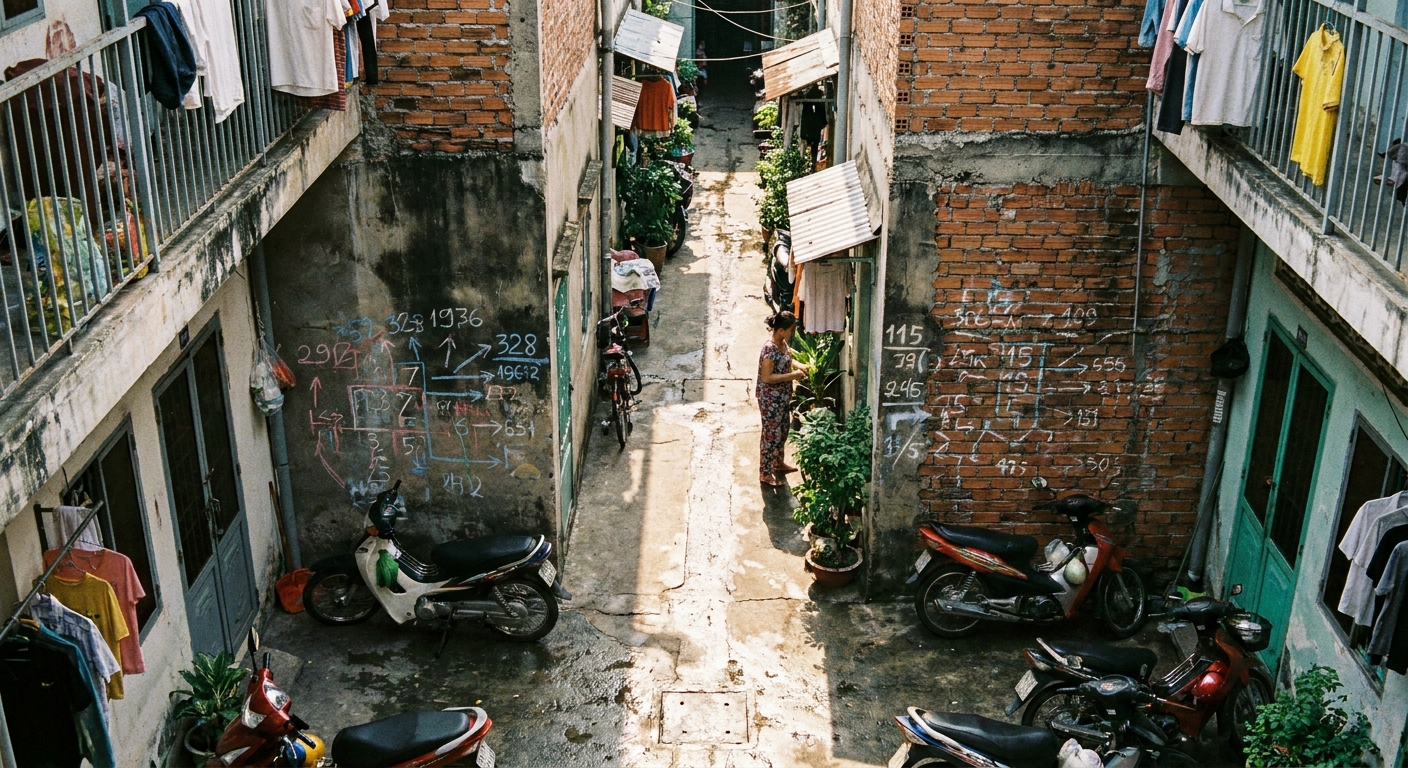
This is precisely why you will eventually find yourself standing on a street corner while a grab driver lost in the side streets calls your phone for the fifth time. It is a rite of passage. If your driver is circling the block, it is usually because the GPS is directing them to the “front” of the building, which might be a solid wall, while the actual entrance to your hotel is located through a narrow alley accessed from the next street over. Vietnamese drivers are masters of the local geography, but even they cannot override the software’s stubborn insistence on taking the shortest path. If you are waiting for a ride, don’t wait at your exact “map” pin. Walk to the nearest major intersection or a recognizable landmark, like a 24-hour convenience store, and pin your location there instead.
Street vendors are the secret keepers of these neighborhoods, and they are far more reliable than any satellite array. If you are truly lost, look for the person selling iced tea or Banh Mi on the corner. They know every house in the quarter. Do not ask them for the “correct” address format, as that doesn’t exist in a way that satisfies a digital algorithm. Instead, show them the name of your destination on your phone. They will likely point you down an alley that looks like a private driveway, shrug, and return to their work. Nine times out of ten, that dark, narrow corridor is exactly where you need to go.
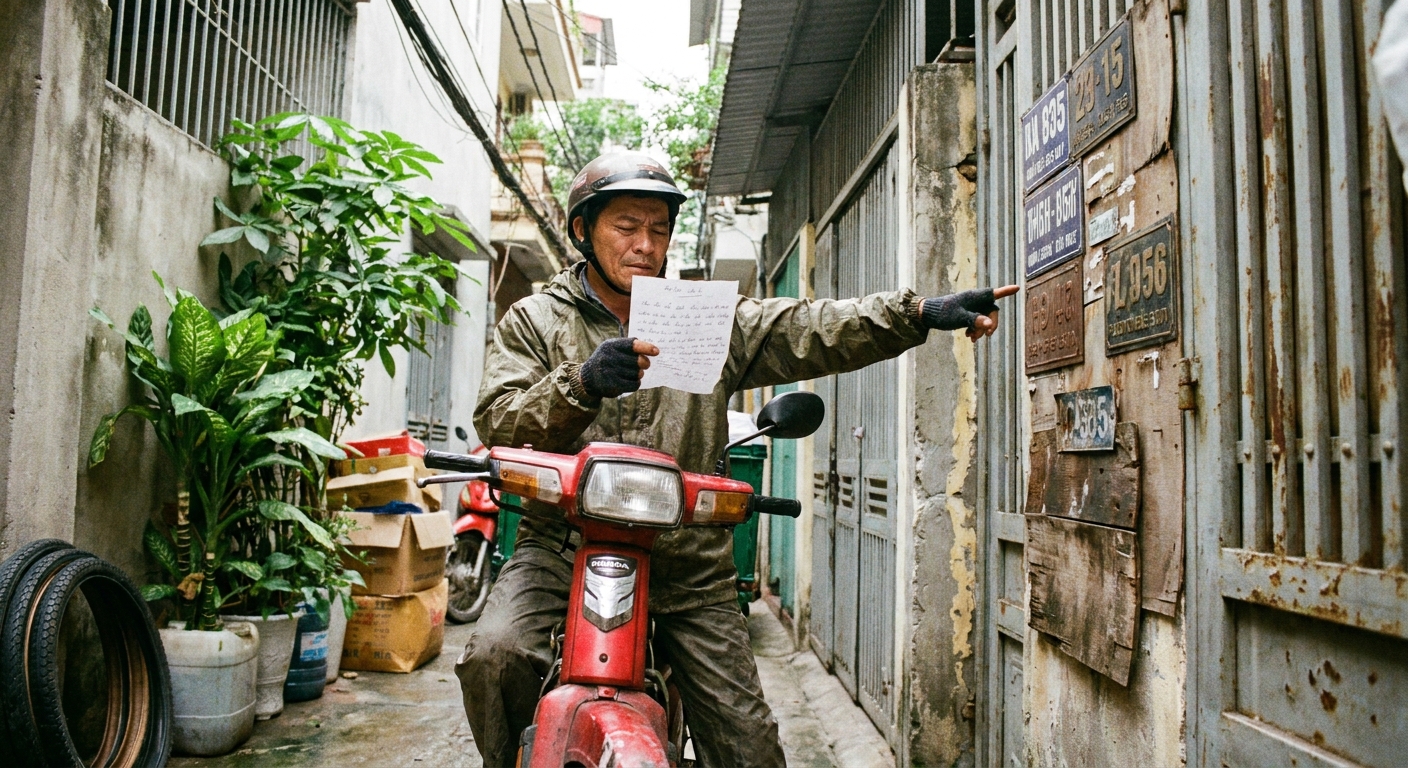
When booking accommodation, the best strategy is to avoid the digital guessing game entirely. Before you leave your current location, ask your hotel or homestay for a “Google Maps pin” rather than a street address. Even better, ask for a photo of the building facade or the entrance to their specific alleyway. There are a few visual cues to look for once you are in the right vicinity:
- Look for the house numbers painted in white or red directly onto the walls or gates, rather than relying on signs.
- Notice if the locals are walking toward a specific cluster of motorbikes parked in a narrow gap between buildings.
- Check the small nameplates on the gates; homestays and small businesses often have their names etched into the metal.
- Listen for the sounds of activity, as residential alleys are rarely silent during the day.
The frustration of a misplaced pin usually dissipates once you realize that the chaos is intentional. The city was built to prioritize human connection and proximity over grid-like efficiency. Being “lost” in a Vietnamese alley is rarely dangerous; it is simply a chance to see the hidden life of the city—the communal altars, the caged birds, the grandmothers peeling vegetables on plastic stools. When the map fails, stow your phone in your pocket, look up at the tangle of power lines above, and follow the flow of the motorbikes. Eventually, the person you are looking for will appear, usually holding a cup of coffee and wondering why you didn’t just call them from the corner shop.