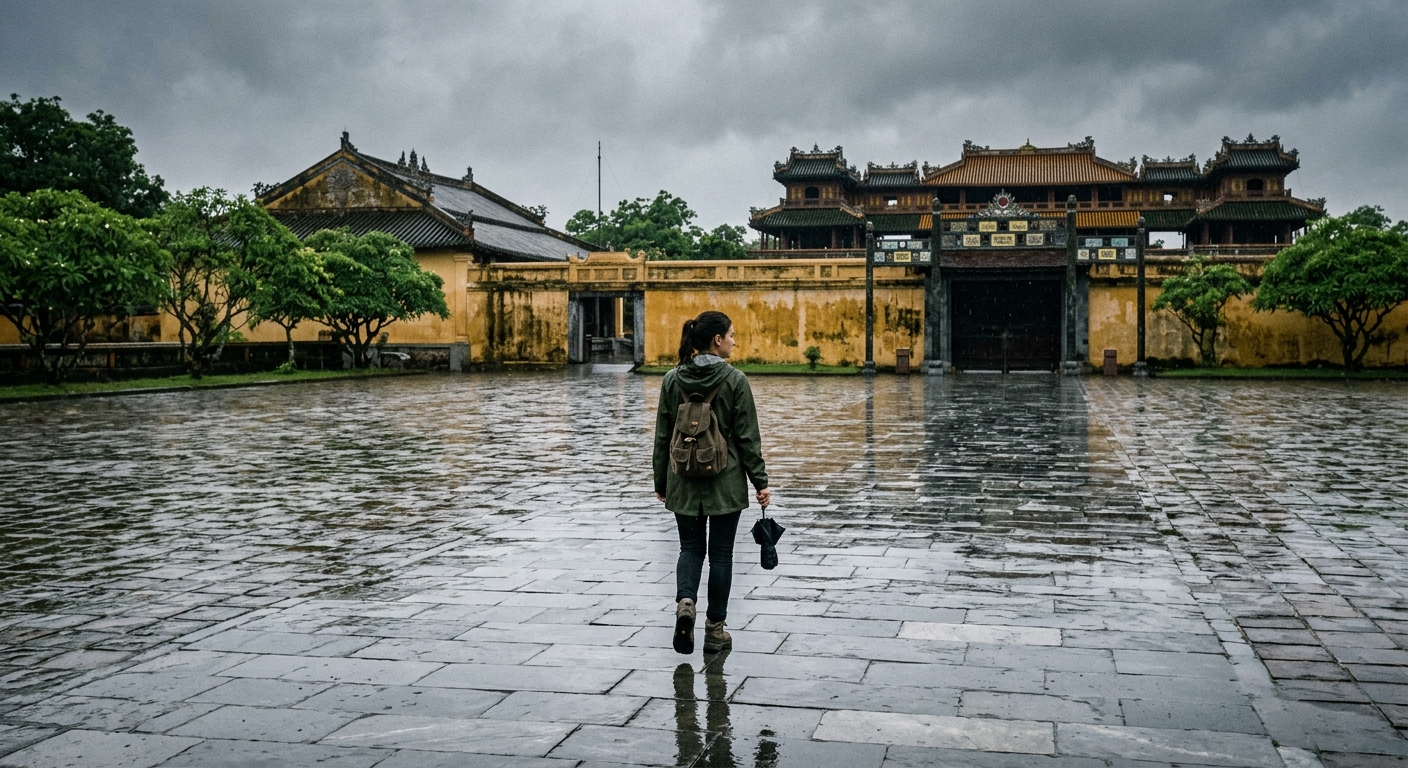
The mist clings to the Perfume River like a shroud, turning the horizon into a watercolor painting of muted greys and deep, mossy greens. Many guidebooks warn against Vietnam rainy season travel, pointing toward the clear, sun-baked skies of the south as the superior choice. But those who skip Hue during the monsoon months miss the city’s true soul. Here, in the ancient capital, the rain doesn’t just fall; it acts as a filter, softening the harsh edges of the past and bringing a profound, heavy silence to the massive stone walls that once housed emperors.
Approaching the Hue Imperial City on a drizzling afternoon feels like stepping through a tear in the fabric of time. The crowds that usually swarm the Ngo Mon Gate are absent, replaced by the rhythmic drumming of rain against lotus leaves in the surrounding moats. With your rain jacket zipped and your camera lens hooded, you begin a Hue citadel walk that feels less like a tourist checklist and more like an intimate encounter with history.
Chasing the Golden Glow of the Citadel
There is a specific quality to the light in Hue during a downpour. As the clouds blanket the sky, the sun is diffused into a flat, soft glow that strips away harsh shadows. This is when the imperial yellow brickwork really performs. Instead of the blinding, high-contrast glare of a summer afternoon, the bricks take on a saturated, ochre warmth that pops against the slate-colored sky. The moss clinging to the grout becomes vibrant, almost neon, while the weathered wood of the palace doors darkens to a rich mahogany. It is a photographer’s dream, provided you keep your gear protected.
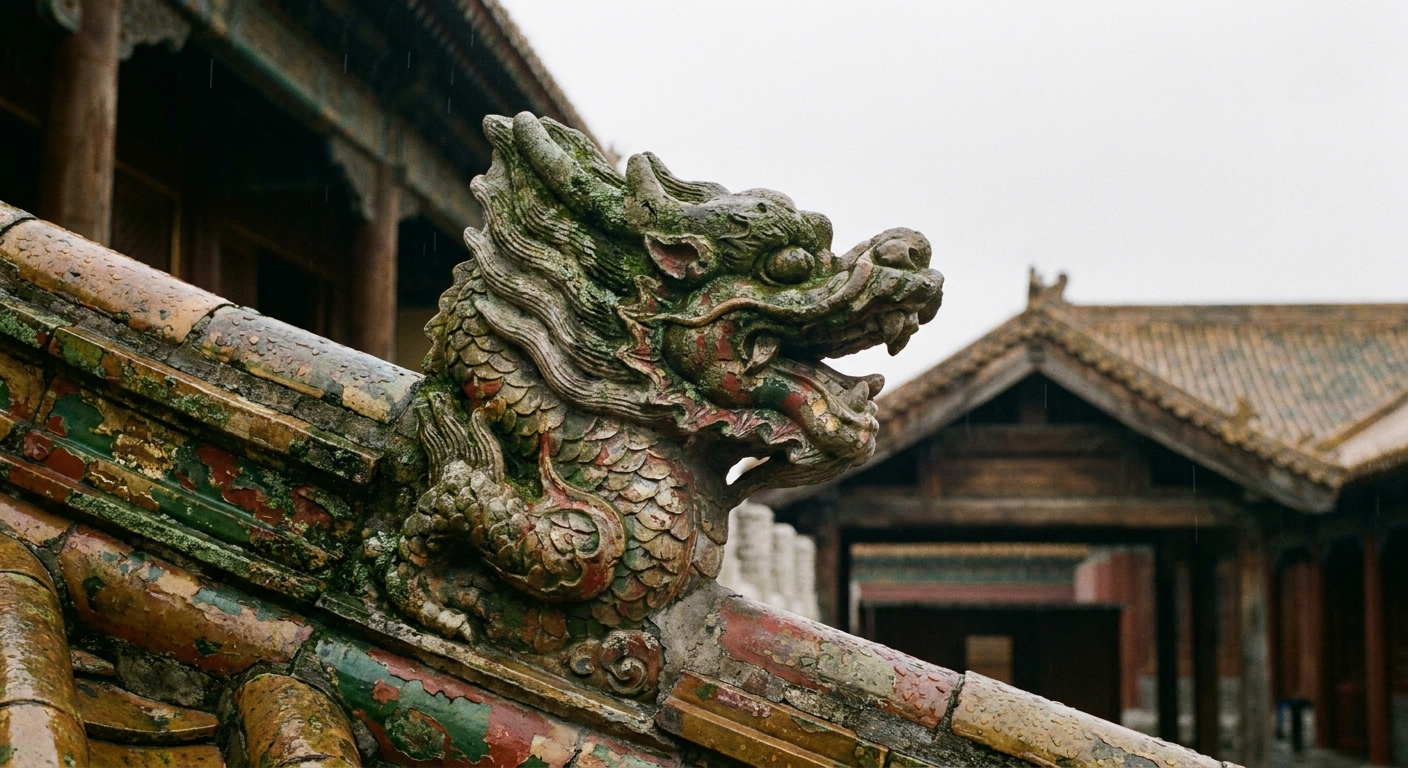
Walking through the vast, semi-deserted courtyards, you notice details that are usually lost in the shuffle of tour groups. The intricate tile work on the roof ridges—dragons and phoenixes battling amidst clouds—becomes starker and more defined in the low light. Without the distraction of chatter, you can actually hear the city breathing. The water drips steadily from the eaves of the pavilions, landing in puddles that mirror the red-lacquered pillars, creating a double vision of the Forbidden Purple City that feels hauntingly fragile.
Logistics matter when the sky opens up, but they needn’t be a burden. If you are staying near the river, a short motorbike taxi ride will drop you at the entrance, but the walk from the moat onwards is best done on foot to truly absorb the scale of the complex. While you traverse the inner grounds, keep these practical tips in mind to maintain your comfort:
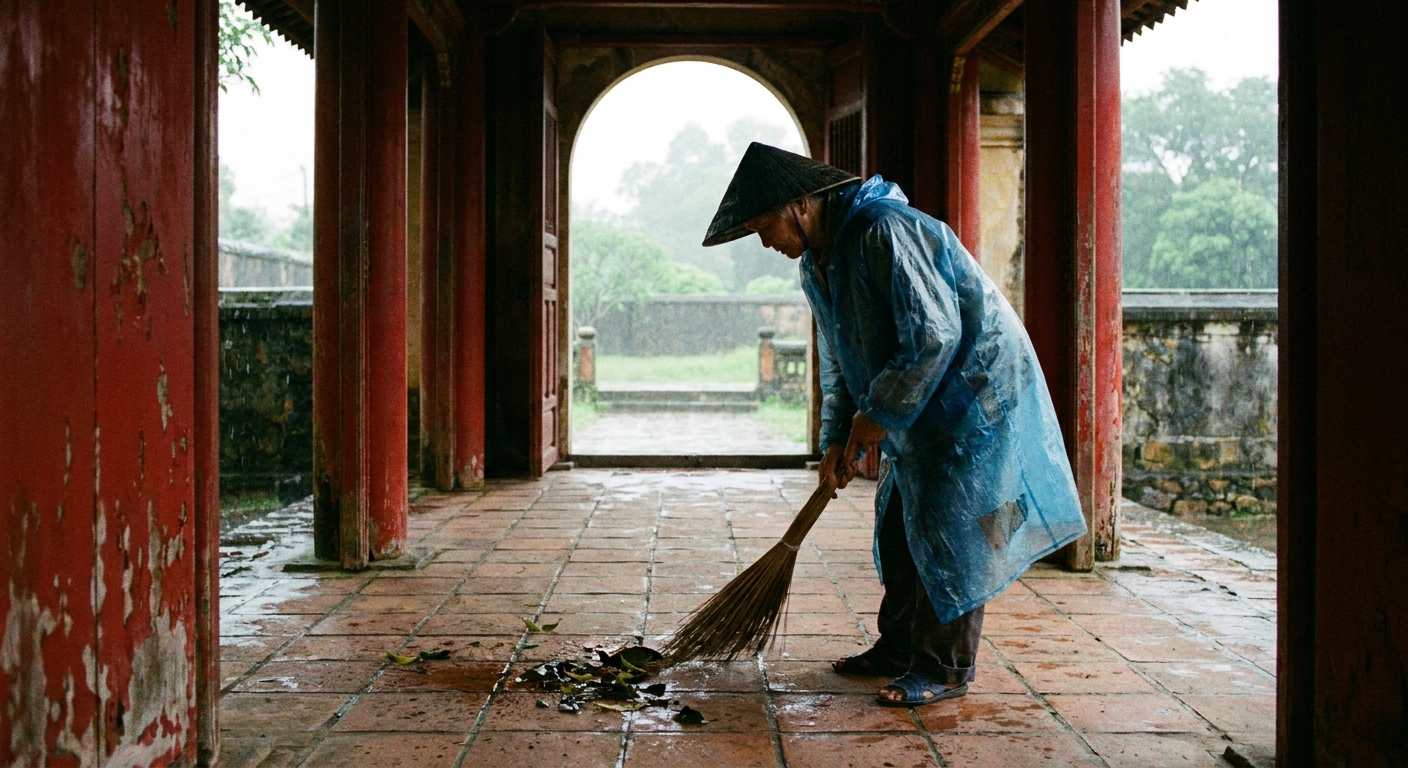
- Invest in a sturdy, locally bought plastic poncho that covers both you and your daypack.
- Wear footwear with aggressive tread, as the polished stone pathways become slick and treacherous when wet.
- Carry a small microfiber towel in a waterproof bag to wipe down seats or camera equipment between stops.
- Accept that your pant hems will get damp; focus on the atmosphere rather than remaining perfectly dry.
As you move deeper into the Forbidden Purple City, the sense of isolation intensifies. The rain turns the gravel paths into dark, slick ribbons leading toward the throne halls. Here, the architecture feels remarkably resilient. The wood, treated with centuries of tradition, seems to swell and deepen in the moisture, holding fast against the elements just as it has for generations. You aren’t merely observing a ruin; you are walking through a space that has weathered countless monsoon seasons, its stones absorbing the history of a dynasty that prioritized aesthetics and ritual above all else.
By the time you reach the back reaches of the complex, near the smaller garden pavilions, the rain might shift from a steady drizzle to a light mist. This is the moment to pause under the ornate roof of a nearby gazebo. Look back toward the main gate. The entire citadel seems to float in the humidity, suspended between the reality of modern Hue outside the walls and the ghosts of the Nguyen Dynasty inside. The lack of noise makes the experience feel secretive, as if the citadel is revealing its true self only to those who didn’t mind getting their shoes a little muddy.
Leaving the citadel as the late afternoon light fades into a bruised purple, you realize the rain is what makes this place coherent. In the heat of the dry season, the Hue Imperial City can feel like an oven, a place to be sprinted through between air-conditioned coffee breaks. In the rain, it becomes a sanctuary of introspection. The weather doesn’t hinder the visit; it provides the necessary stillness to appreciate how these halls were meant to be experienced: slowly, quietly, and with a deep respect for the elements that have shaped this landscape for centuries.