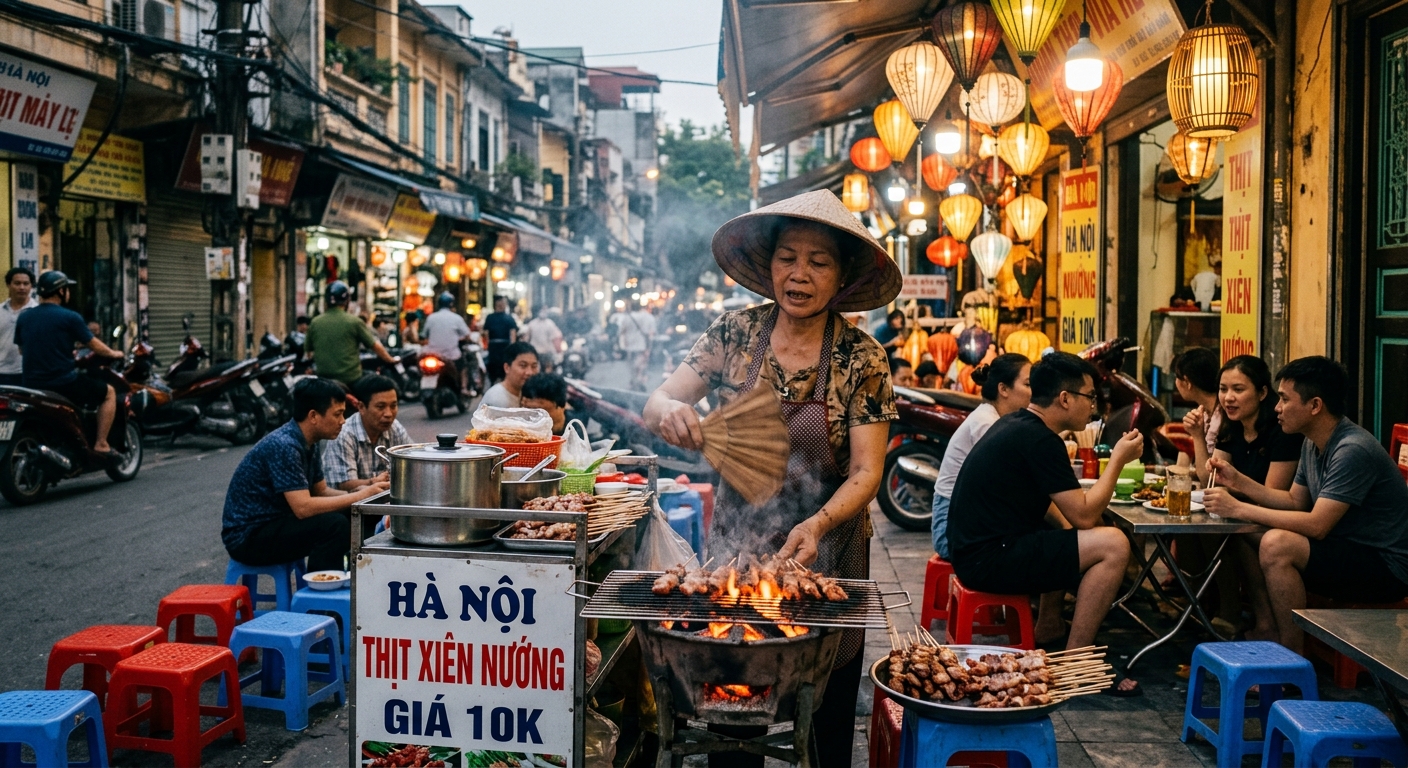
The plastic stool is barely a foot off the ground, its surface scrubbed thin by a decade of use. Above, a tangle of power lines vibrates in the breeze while the heavy, humid air of Hanoi’s Old Quarter carries the unmistakable scent of star anise, charred pork, and motor oil. You have your bowl of Bun Cha in front of you, but there is a hesitation. It is the classic traveler’s dilemma: you want the authenticity of the street, but you are terrified of the aftermath. The truth is that staying healthy while eating your way through Vietnam is less about luck and more about reading the invisible signs of a high-functioning kitchen.
Reading the Rhythm of the Sidewalk
When you are looking for hanoi street food safe spots, the first thing to ignore is the menu—or lack thereof. Instead, watch the turnover. A stall that is perpetually busy is a self-cleaning machine. The ingredients don’t sit in the heat because they are being cooked and served as fast as the vendors can ladle them out. If you walk past a place and notice a steady stream of locals, particularly office workers in crisp shirts or families sharing a meal, you have found a reliable kitchen. These regulars do not come back for food that makes them sick; they come back for the consistency of the flavor and the freshness of the greens.
I usually look for the “one-dish wonders.” If a stall only serves Pho Bo, they are experts at managing that specific supply chain. They know exactly how much beef to buy, how to store it, and how quickly it moves. Avoid the places with laminated menus featuring fifty different photos of everything from pizza to spring rolls; those kitchens are juggling too many ingredients, and that is where the danger lies. Stick to the vendor who has been stirring the same pot for twenty years. They have a reputation to protect, and in a city as tight-knit as Hanoi, word of a bad batch travels faster than a motorbike through a red light.
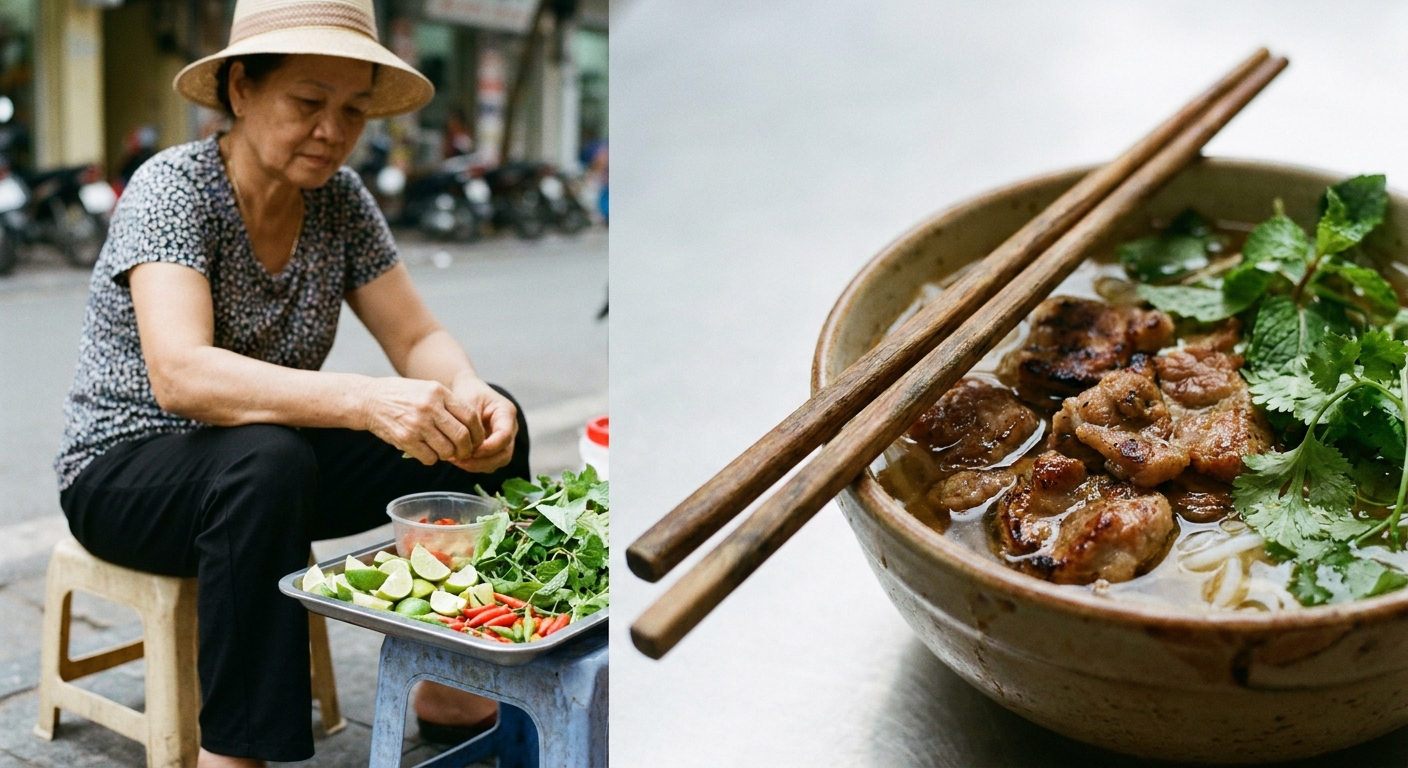
As you pull up a chair, pay attention to the environment. You don’t need a white-tablecloth experience, but you do want to see some basic hygiene habits in motion. Are the bowls being rinsed in a stagnant bucket, or is there running water? Is the ice shaped like a tube with a hole in the center? That hole is your best friend. It signifies that the ice was produced in a commercial factory, rather than being hand-shaved from a block that was likely transported on the back of a dirty truck. It is one of those small vietnam street food tips that significantly lowers your risk of an upset stomach.
If you are still feeling uneasy, here is a quick guide to keeping things simple:
- Eat during peak hours when the food is freshly cooked and hot.
- Avoid raw salads or unpeeled fruits if your stomach is particularly sensitive.
- Choose stalls where the food is cooked right in front of you, ensuring it is piping hot.
- Stick to bottled water or tea that has been boiled recently.
There is also the matter of the greens. It is tempting to pile your bowl high with the fresh herbs and lettuce offered on the side, but if you are truly worried about your system, keep it to a minimum or skip the raw herbs entirely for the first few days. Heat is your greatest ally in this city. A bowl of soup that is boiling when it hits your table is as sterile as it gets. If you are eating grilled meats, ensure they are cooked thoroughly—look for a nice char, which indicates high heat, and avoid anything that looks pink or lukewarm in the center.
The anxiety often stems from the feeling that we are stepping into a chaotic, unregulated world. But the sidewalk food scene in Hanoi is actually highly structured. It is governed by neighborhood loyalty and the constant demand for quality. When you sit down at a stall, you aren’t just a tourist; you are part of a ritual that has sustained this city for generations. The vendor is watching you, not because you are a stranger, but because they want you to enjoy the meal enough to return. By choosing the busy, specialized stalls and prioritizing heat, you aren’t just keeping your stomach safe—you are opening yourself up to the real flavor of the capital. The fear begins to fade as soon as you take that first bite of broth, realizing that the system works exactly as it should.