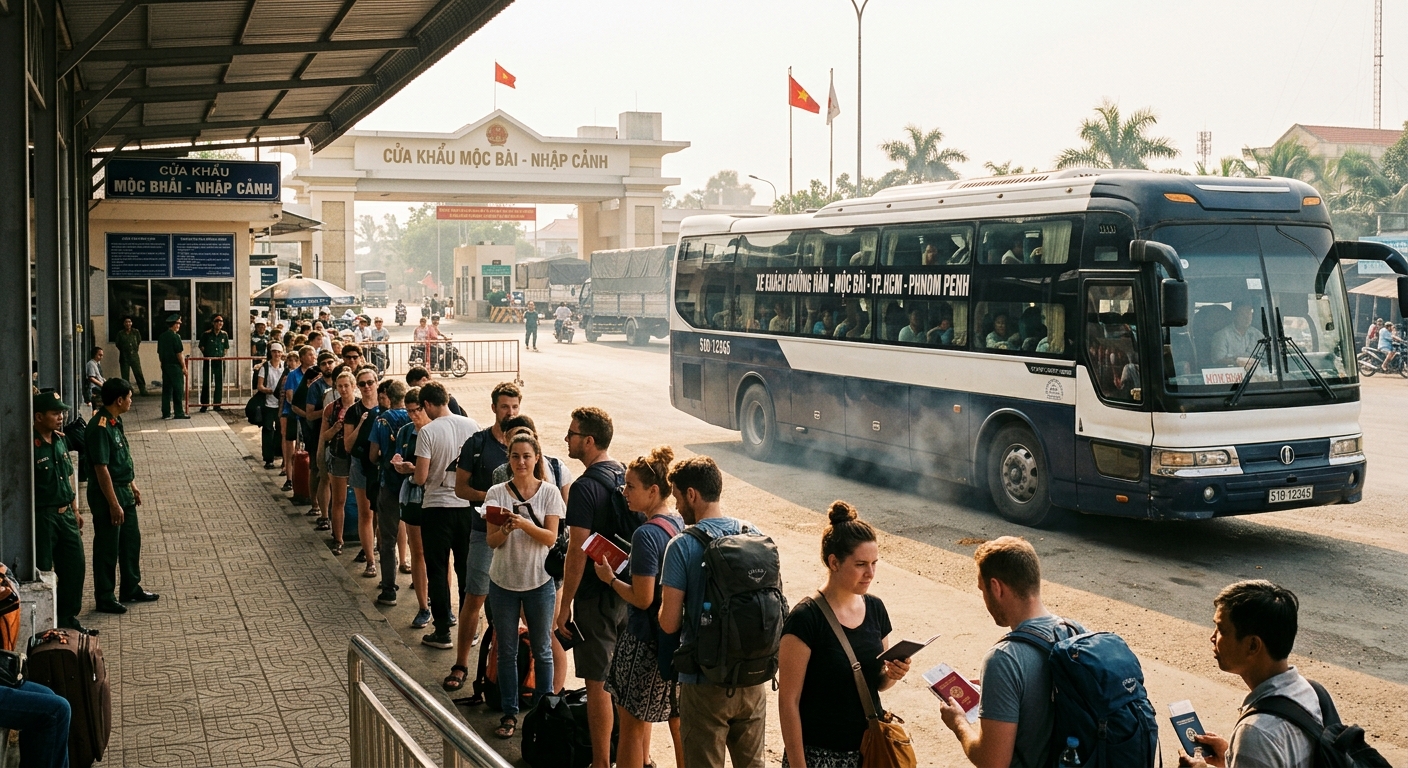
The humidity in Ho Chi Minh City clings to you even at seven in the morning, especially when you are standing on the sidewalk of Pham Ngu Lao, surrounded by the organized chaos of motorbikes weaving through the morning commuters. Most travelers making the journey from Ho Chi Minh to Phnom Penh opt for the bus, and for good reason: it is the most straightforward, budget-friendly way to cross the international border between two of Southeast Asia’s most compelling countries. There is a specific rhythm to this journey, one that shifts from the urban sprawl of Saigon to the wide, dusty plains of Cambodia, interrupted only by the ritual of the border crossing.
Booking a bus ticket is simple enough; you can do it through your hotel, a travel agency on the street, or directly through one of the more reputable bus companies like Giant Ibis or Kumho Samco. The bus will pick you up, often from a centralized office rather than your hotel door, and weave its way out of the city. As the high-rises give way to the low-slung, green paddies of Tay Ninh province, the pace slows significantly. You are heading toward the Moc Bai Bavet crossing, the primary artery for road travel between the two nations.
The Ritual of the Border Crossing
When the bus pulls up to the Vietnamese side of the border, the driver will collect everyone’s passports. If you have already secured your Cambodian e-visa, the process is usually just a matter of waiting for the stamps. However, the reality of the visa-on-arrival process at Bavet can be a bit more unpredictable. Travelers who have not pre-arranged their paperwork often find themselves filling out forms in a cramped office space while the rest of the passengers wait in the stifling heat of the bus or a nearby roadside stall. It is worth noting that while visa-on-arrival is available for many nationalities, having your e-visa printed and ready will save you a significant amount of time and potentially prevent unnecessary “processing fees” that sometimes appear out of thin air when officials see a frazzled traveler.
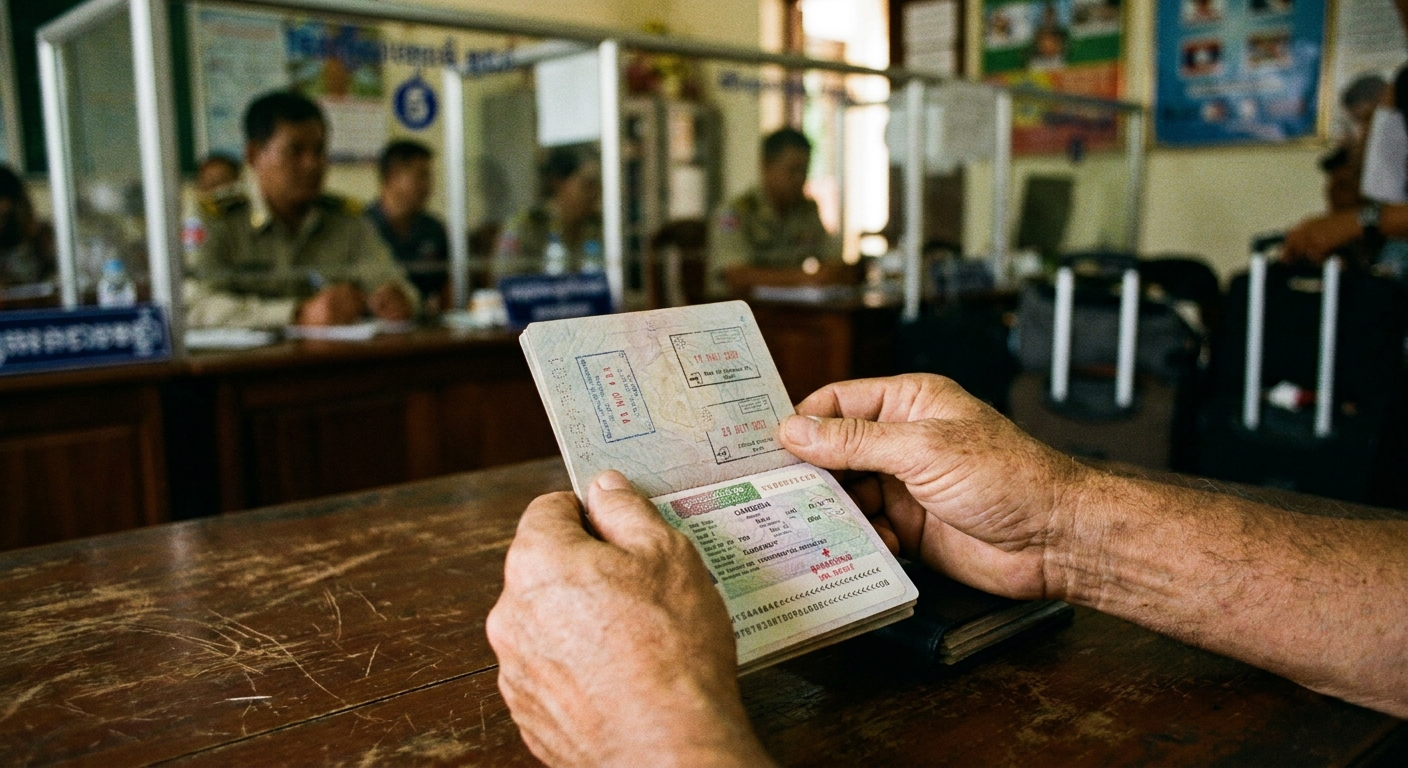
The border building itself is functional and utilitarian. It lacks the polish of a modern international airport, feeling more like a bustling transit hub where the air is thick with diesel fumes and the impatient energy of cross-border commerce. You will disembark from the bus, luggage in tow, and walk through the passport control window on the Vietnamese side. Once stamped out, you walk across the no-man’s-land—a stretch of dusty asphalt that separates the two nations—to the Cambodian immigration building. It is a strange, liminal space where the local language and currency seem to bleed from one side to the other. You will be expected to present your passport and visa, and occasionally, you may be asked to pay a small fee for a “health check” or a stamp, which is a common quirk of this specific land crossing.
Once you are through, you will find your bus waiting on the other side of the checkpoint. If you are doing a vietnam cambodia border bus transit for the first time, keep your essential belongings with you at all times. Do not leave passports or electronics on the bus while it is parked at the border; even if the bus is locked, it is always safer to carry your valuables through the physical checkpoint with you. Once everyone is back on board, the driver will count heads, and you will continue the journey toward Phnom Penh. The landscape changes almost immediately; the roads become wider, the architecture shifts toward the distinct style of Cambodian pagodas, and the bustling energy of the countryside takes on a different, slightly slower tempo.
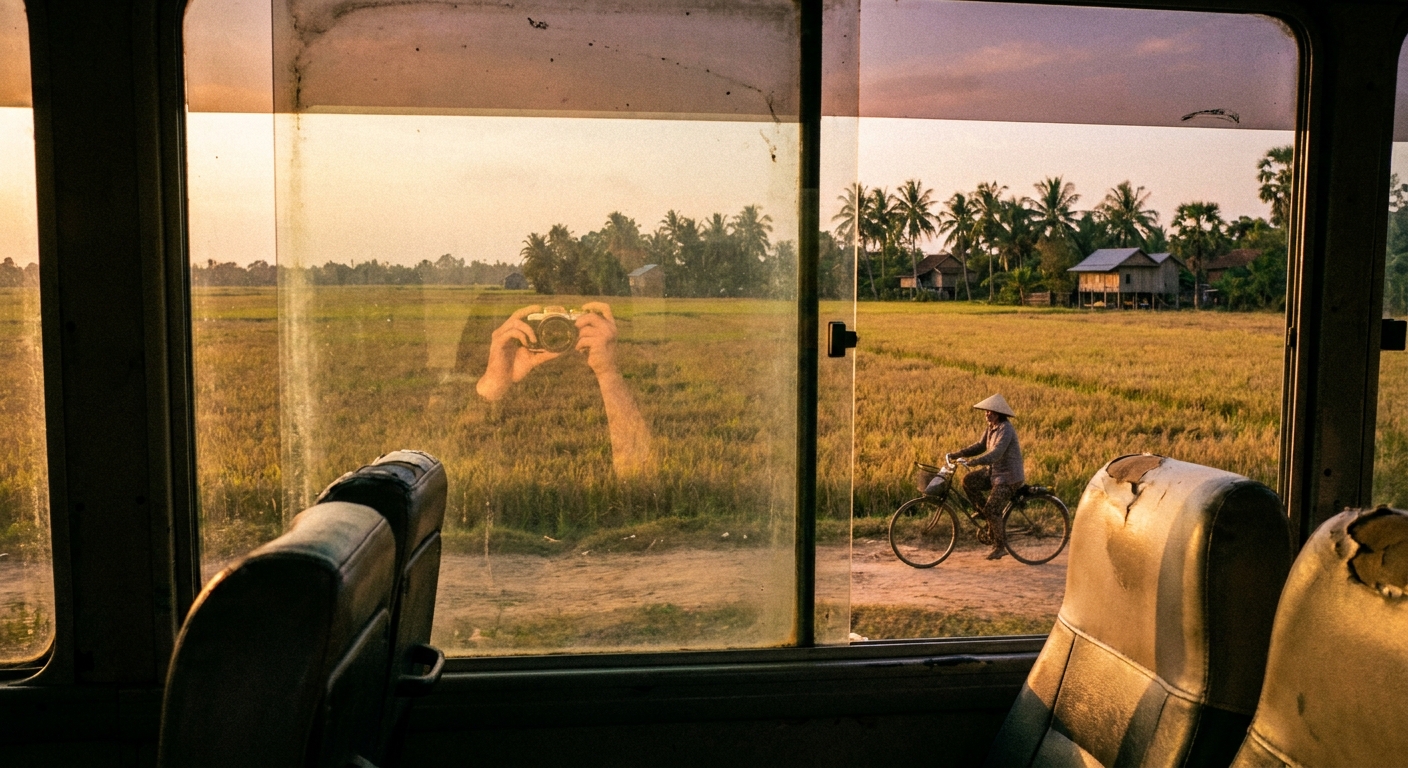
The final leg of the drive takes several hours. You will pass through small towns where children wave from the roadside and monks walk in saffron robes against the stark backdrop of the dry season fields. By the time you reach the outskirts of Phnom Penh, the sun is often dipping low, painting the Mekong in hues of burnt orange. The traffic in the capital is a different beast entirely, and the bus will likely drop you at a designated terminal near the riverfront. Stepping off the bus, the air feels different—less congested than Saigon, yet buzzing with its own unique intensity. You have traded the frantic pace of the Vietnamese megalopolis for the storied, resilient streets of Cambodia’s capital, having navigated one of the most classic overland routes in the region. It is not an experience defined by luxury, but it is an authentic slice of regional transit that offers a clear look at how these two neighbors interact on a daily basis.