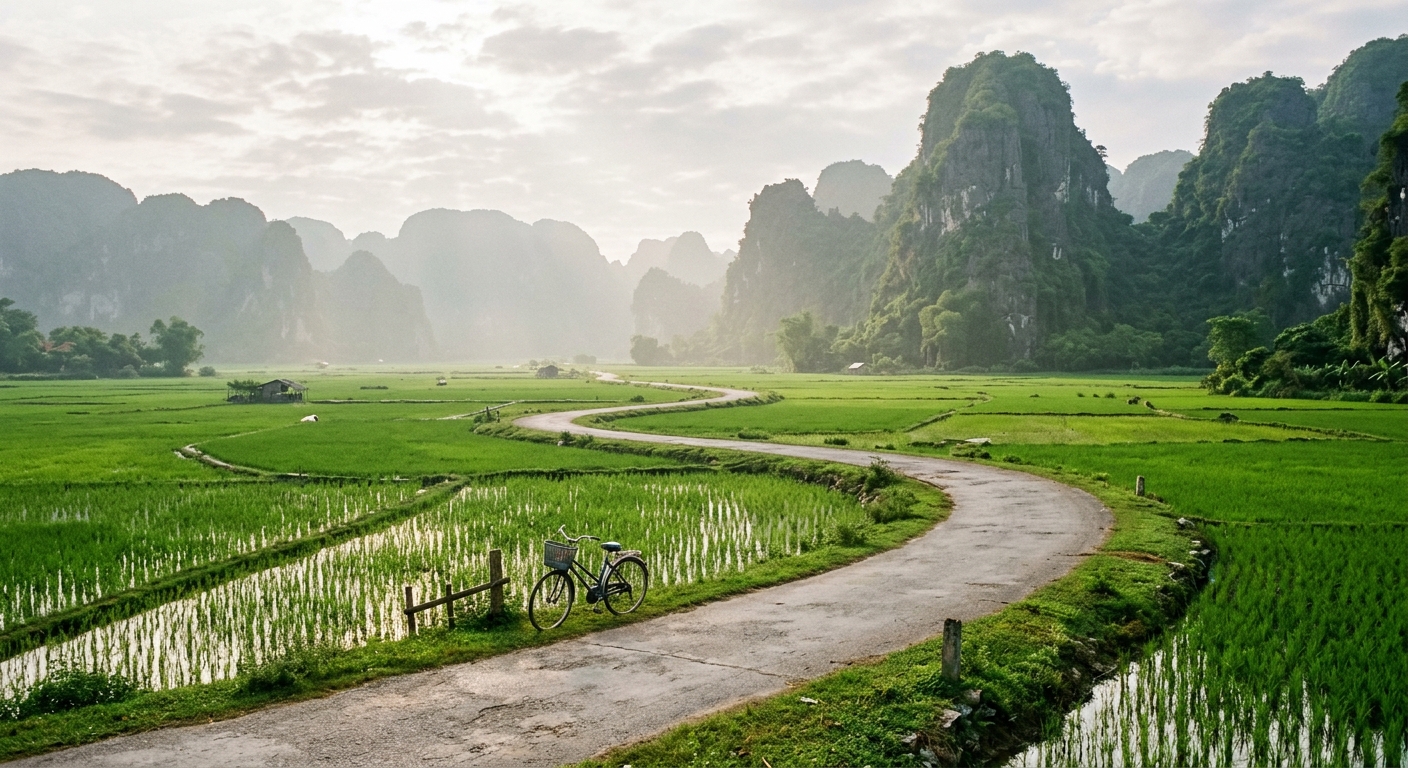
The humidity in Ninh Binh doesn’t sit on you; it clings to the limestone karsts, creating a soft, ethereal haze that makes every sunrise look like a vintage photograph. Most travelers arrive here chasing the grandeur of the ancient capital, but the true pulse of the province is found on two wheels, pedaling at a pace that allows you to actually smell the ripening rice stalks and the damp earth of the riverbanks. Renting a single-speed bicycle in Tam Coc is an exercise in intentional slowing down. You don’t need gears when the landscape is essentially a flat, verdant tapestry woven between jagged monoliths that seem to erupt directly from the soil.
Start your morning while the rest of the backpacker crowd is still nursing their first cà phê sữa đá. The light in this part of northern Vietnam during the early hours is deceptive; it’s soft, diffused, and frankly, it breaks every smartphone camera in the best possible way. The golden hour here isn’t just a brief window—it’s a long, lingering state of grace where the limestone shadows stretch across the paddies, turning the greens into something almost electric. If you head toward the backroads behind the main tourist strip of Tam Coc, you leave the hawkers and the bus tours behind, finding yourself alone on a dirt path where the only traffic is a water buffalo with a very specific destination in mind.
Pedaling Through the Karst-Paddy Corridor
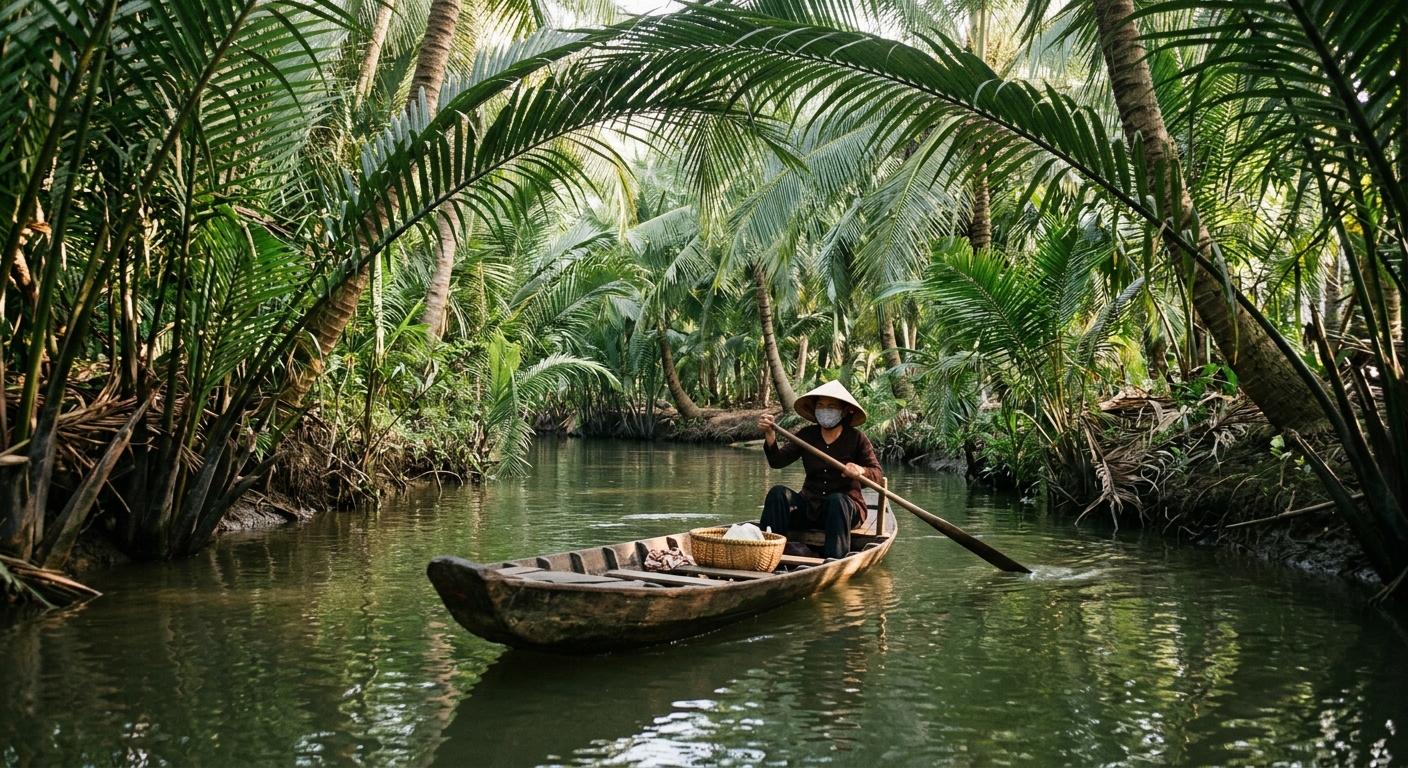
The beauty of a ninh binh bicycle excursion is that you aren’t bound by a driver’s schedule or the walls of a van. You can stop whenever the urge strikes, whether it’s to photograph a particularly stubborn goat or to watch an elderly farmer skillfully maneuvering a flat-bottomed boat with nothing but a bamboo pole. The route connecting the main town to the wider valley is mostly paved, though it quickly disintegrates into gravel tracks that hug the base of the mountains. These are the paths where the real magic happens. You’ll ride through tunnels of bamboo and past crumbling temples that feel like they’ve been swallowed by the jungle.
By mid-morning, you will inevitably find yourself hungry. Do not look for a restaurant with an English menu. Instead, keep an eye out for a roadside stall with plastic stools and a bubbling pot of broth. This is where you find the local specialty: thịt dê, or mountain goat. It is lean, earthy, and perfectly prepared as a fragrant, herbal pho. Eating this bowl of steaming soup while perched on a stool that barely touches the ground, watching the karst shadows shift, is a fundamental part of the experience. It is simple, unpretentious, and costs less than a latte back home. Fueling up here provides the necessary strength to finish your loop, which will eventually lead you toward the water-logged corridors of the Trang An complex.
While the trang an boat trips are the province’s most famous export, seeing the river from the saddle of your bike offers a different perspective entirely. You can stand on the bridges and watch the long, slender wooden boats glide silently through the caves below. The water is so clear that you can count the pebbles on the riverbed, and the silence in the deep limestone tunnels is absolute. You don’t need to do the full three-hour tour to appreciate the scale of the landscape; just cycling along the perimeter of the protected UNESCO site provides enough sweeping vistas of water and cliff to fill your memory card twice over.
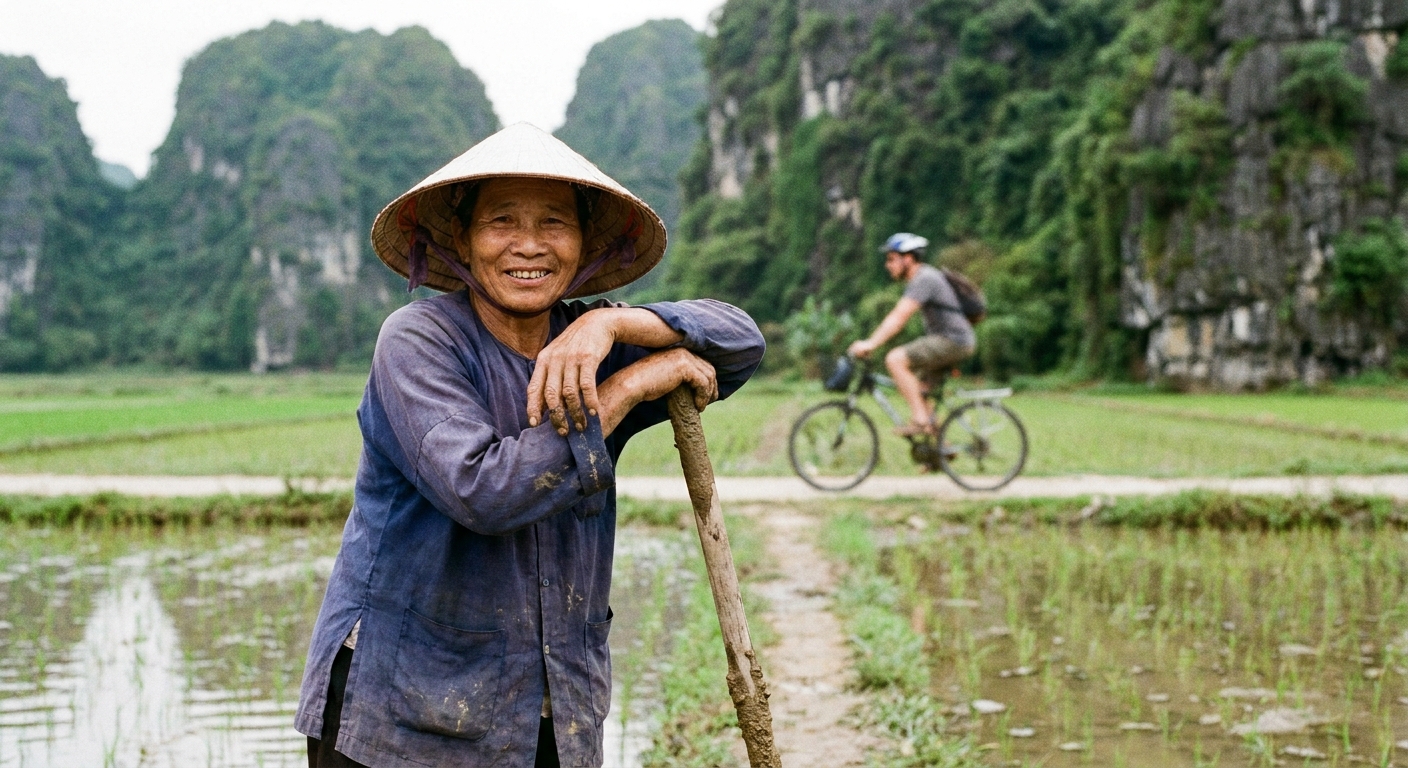
When you finally return your bike to the rental shop as the heat begins to sharpen, you’ll realize that the gear-less bicycle was the perfect tool for the job. It forced you to handle the terrain on its own terms, making you earn every slight incline and rewarding you with a stillness that a motorized scooter would have shattered with a single rev of the engine. The tam coc loop is not about covering distance or checking off a list of coordinates; it is about the way the wind feels when you’re cutting through a narrow valley, the taste of the local goat soup, and the way the limestone peaks seem to lean in to share their secrets with anyone quiet enough to listen. As the sun climbs higher and the haze begins to burn off, the landscape loses that delicate, painterly quality, reminding you that you’ve caught the best part of the day exactly when you were supposed to.