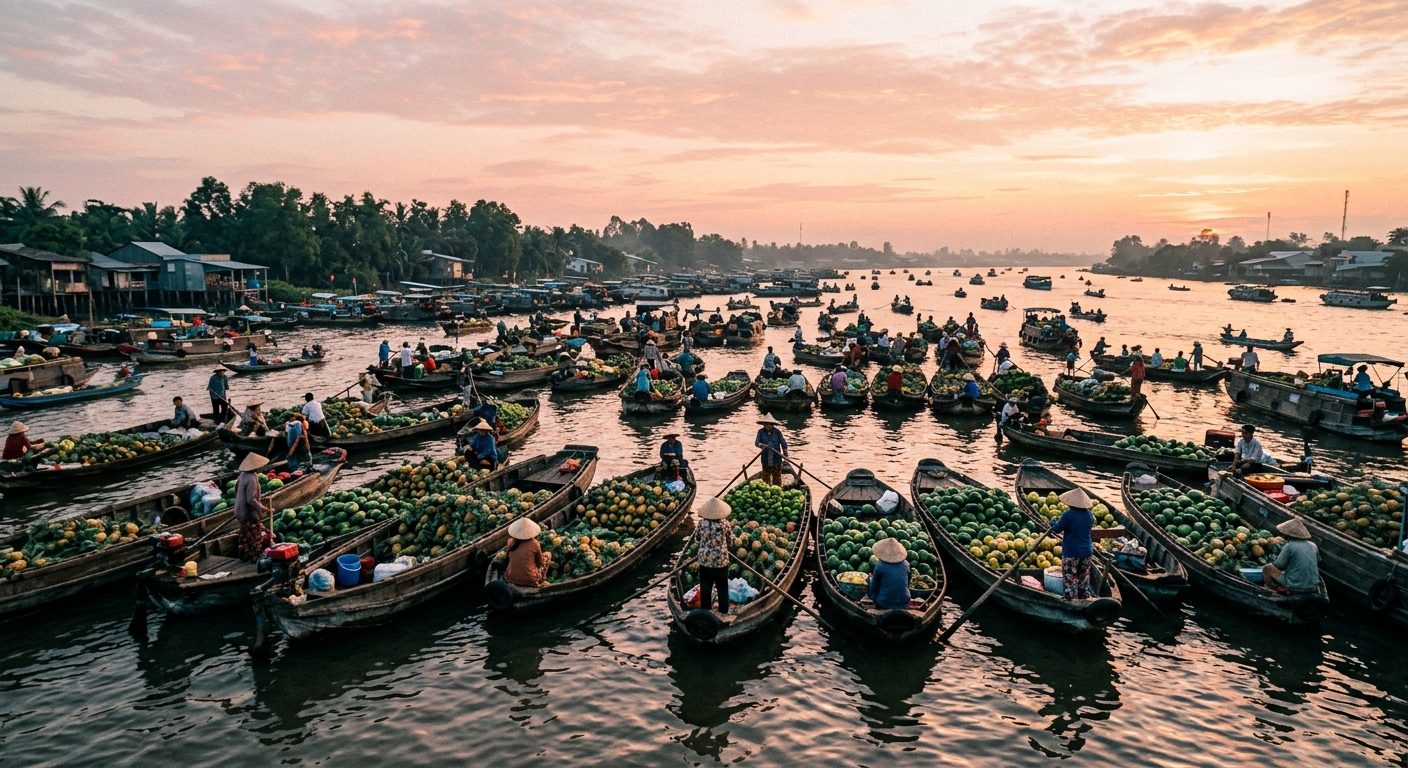
The air at 5:00 AM in Can Tho is thick, humid, and smells faintly of river silt and diesel exhaust. While the rest of the city is still shaking off the night, the Ninh Kieu pier is already humming with the rhythmic thrum of outboard motors. To reach the Cai Rang floating market before the mid-morning heat—and more importantly, before the flotilla of tour buses arrives from Ho Chi Minh City—you have to be on the water while the sky is still a deep, bruised purple.
Most travelers make the mistake of sleeping in, thinking the market is an all-day affair. By 8:30 AM, the waterway becomes a congested parade of speedboats and shutter-happy tourists, stripping the scene of its authentic, gritty charm. Arriving by 6:00 AM changes everything. This is when the real trade happens, a complex dance of commerce conducted between farmers and middlemen long before the average visitor has finished their hotel breakfast.
The Geometry of River Commerce
As you glide through the mist, you’ll notice that each boat acts as a floating billboard. The towering wooden poles—known as cây bẹo—jutting from the bows aren’t just for decoration; they are the market’s visual inventory system. If you see watermelons dangling from a pole, that boat is selling watermelons. Cabbages, pumpkins, pineapples, or sweet potatoes—whatever is skewered on the pole is what that specific boat is hauling from the upstream orchards. It is an ingenious, low-tech way to signal stock across a crowded, noisy waterway where shouting is useless against the roar of engines.
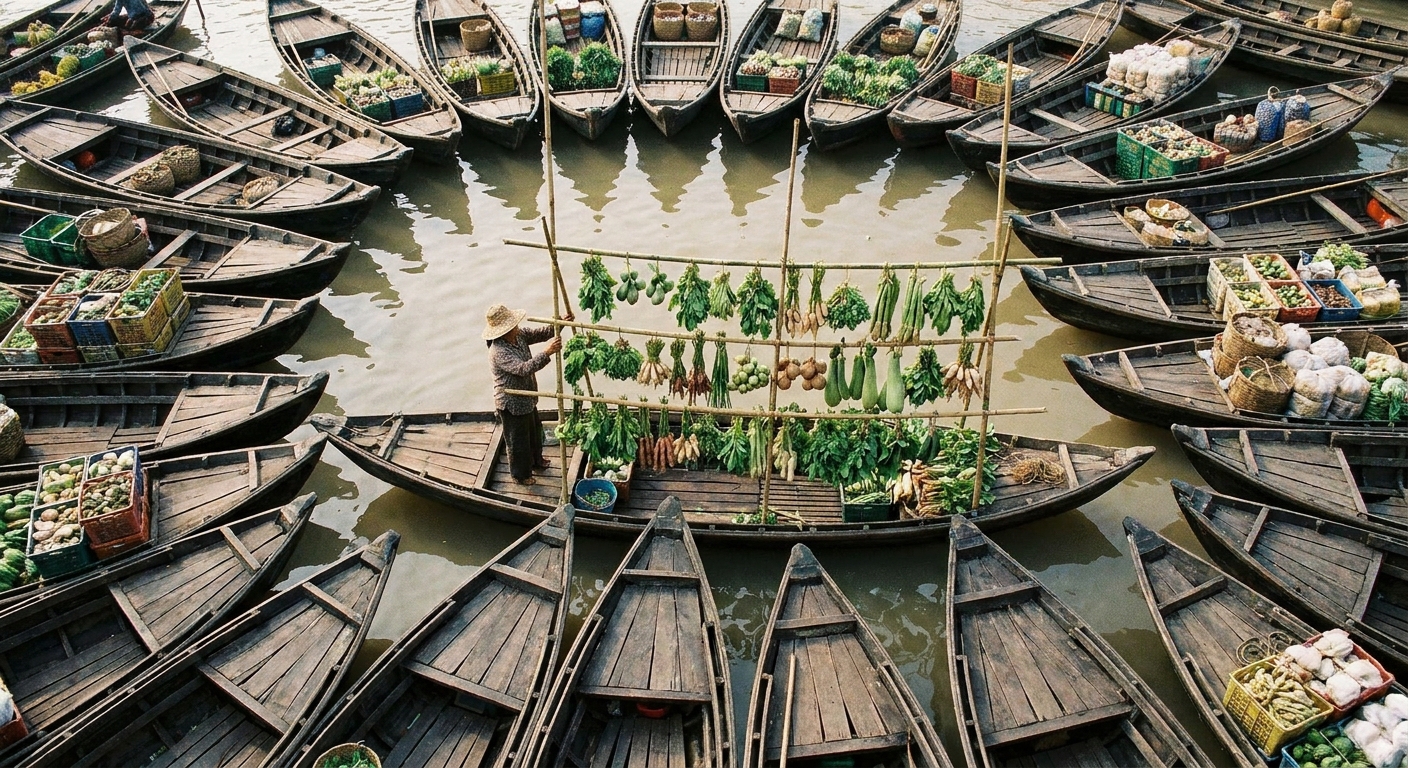
Navigating the market requires a keen eye. You will see small, motorized sampans weaving between the heavy barges. These are the retailers, the local vendors who buy wholesale from the large boats and then maneuver through the smaller tributaries to deliver fresh produce to the doorsteps of riverside houses. Watching them toss bags of chives or bundles of morning glory from one moving boat to another is a masterclass in balance and timing. It is this authentic pulse that makes a Mekong delta tour feel like stepping into a living, breathing history rather than a curated tourist attraction.
The best way to experience this is to hire a private boat, rather than joining a crowded group tour. A smaller boat sits lower in the water, allowing you to drift closer to the action without disrupting the flow of the market. You can pull alongside a kitchen boat—a vessel identifiable by the thin plume of smoke rising from its stern—to grab a bowl of hủ tiếu, a local noodle soup served in a plastic bowl that you balance on your knees while the current gently nudges you forward. The broth is rich, slightly sweet, and precisely what you need to cut through the damp morning chill of the Can Tho morning.
Once the sun begins to climb and the larger vessels start clearing out, the true magic of the delta reveals itself. This is the time to ask your boat driver to duck into the smaller, narrower irrigation canals that branch off from the main river. The transition is jarring in the best way possible. The industrial noise of the wholesale trade fades, replaced by the sound of water lapping against the hull and the rustle of palms.
These smaller canals are shaded by thick canopies of coconut and banana trees, creating a cool, emerald-toned tunnel that feels lightyears away from the bustle of Cai Rang. Along these banks, you get a glimpse of the real life of the Mekong: children splashing in the shallows, women scrubbing laundry on wooden platforms, and the occasional water monitor lizard slipping silently into the muck. It is a slow, contemplative contrast to the frenetic energy of the market you just left. Here are a few things to keep in mind when venturing into these narrower paths:
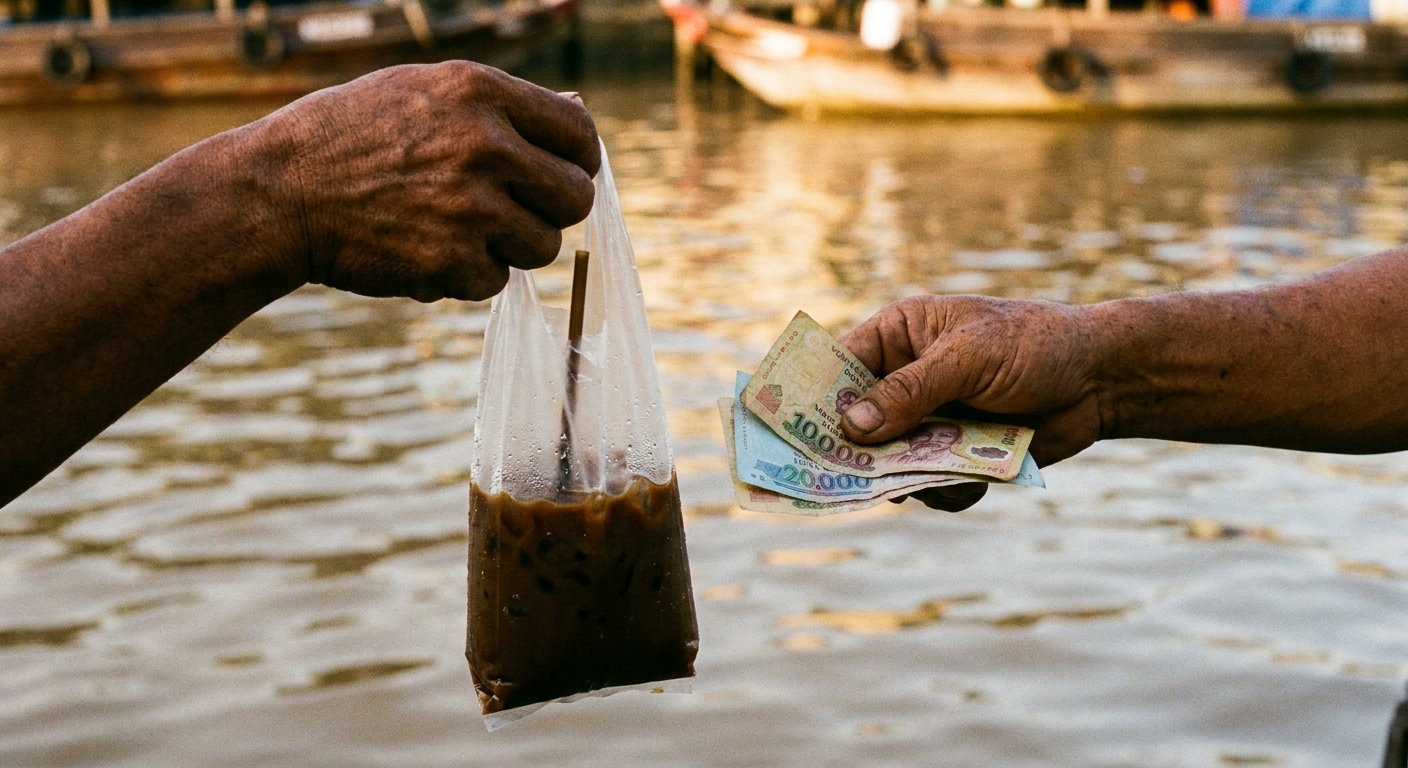
- Carry small denominations of Vietnamese Dong for purchasing coffee or fruit directly from boats.
- Dress in layers, as the cool river mist disappears rapidly once the sun crests the tree line.
- Bring a dry bag for your camera gear to protect it from the inevitable splash of the sampan.
- Respect the privacy of the families living along the canals by keeping your voice low.
By the time you return to the main pier, the rest of the world is just starting to wake up. Your clothes will likely be slightly damp from the river spray, and you will smell faintly of roasted coffee and river water, but you will have captured the essence of the region before the glare of the day set in. The beauty of the Mekong lies in these early hours, in the silence of the canals and the singular focus of the traders who have built their entire lives upon the changing tides.