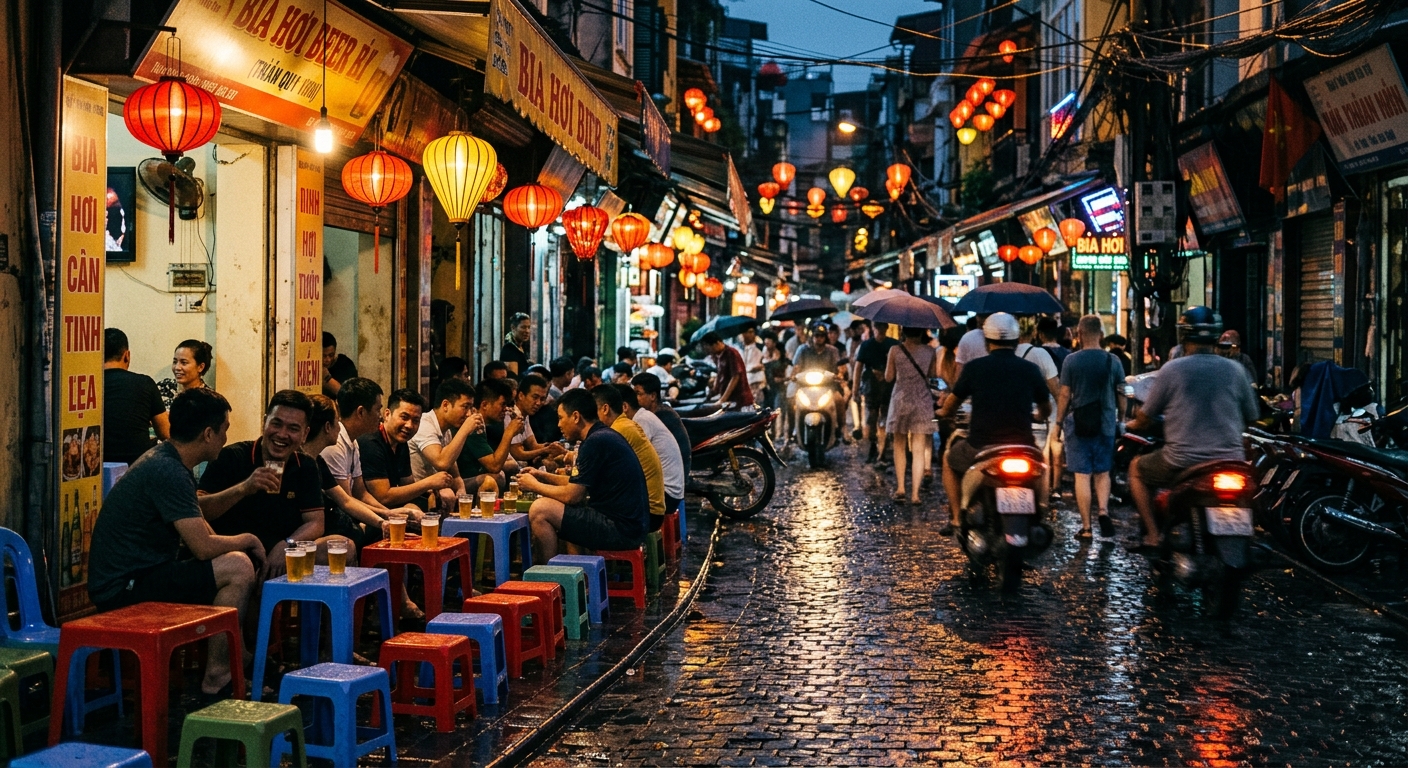
The humidity in Hanoi’s Old Quarter doesn’t just hang in the air; it clings to the red plastic stools that crowd the narrow intersection of Ta Hien Street. By 6:00 PM, the street is already a choreographed mess of motorbikes, vendors clutching bundles of grilled pork skewers, and travelers squinting at menus. If you arrive after 7:00 PM, you’ve missed the prime window. The street transforms into a wall-to-wall corridor of humanity, making it nearly impossible to snag a front-row seat to the best show in the city: the nightly migration of locals and tourists merging over glasses of amber liquid.
When you talk about drinking in the capital, you have to distinguish between the two distinct cultures at play. On one side, you have bia hoi vietnam, the legendary fresh beer that is brewed daily, contains no preservatives, and costs pennies. It’s light, crisp, and best consumed in high volumes while perched on a sidewalk. On the other side, the recent explosion of hanoi craft beer has brought a sophisticated, IPA-heavy edge to the neighborhood. These bars aren’t trying to replace the traditional experience; they are elevating the palette of the district by introducing bold hops and high-gravity stouts to a crowd that has traditionally reached for something watery and refreshing.
Charting the Loop from Ta Hien to the Hidden Alleys
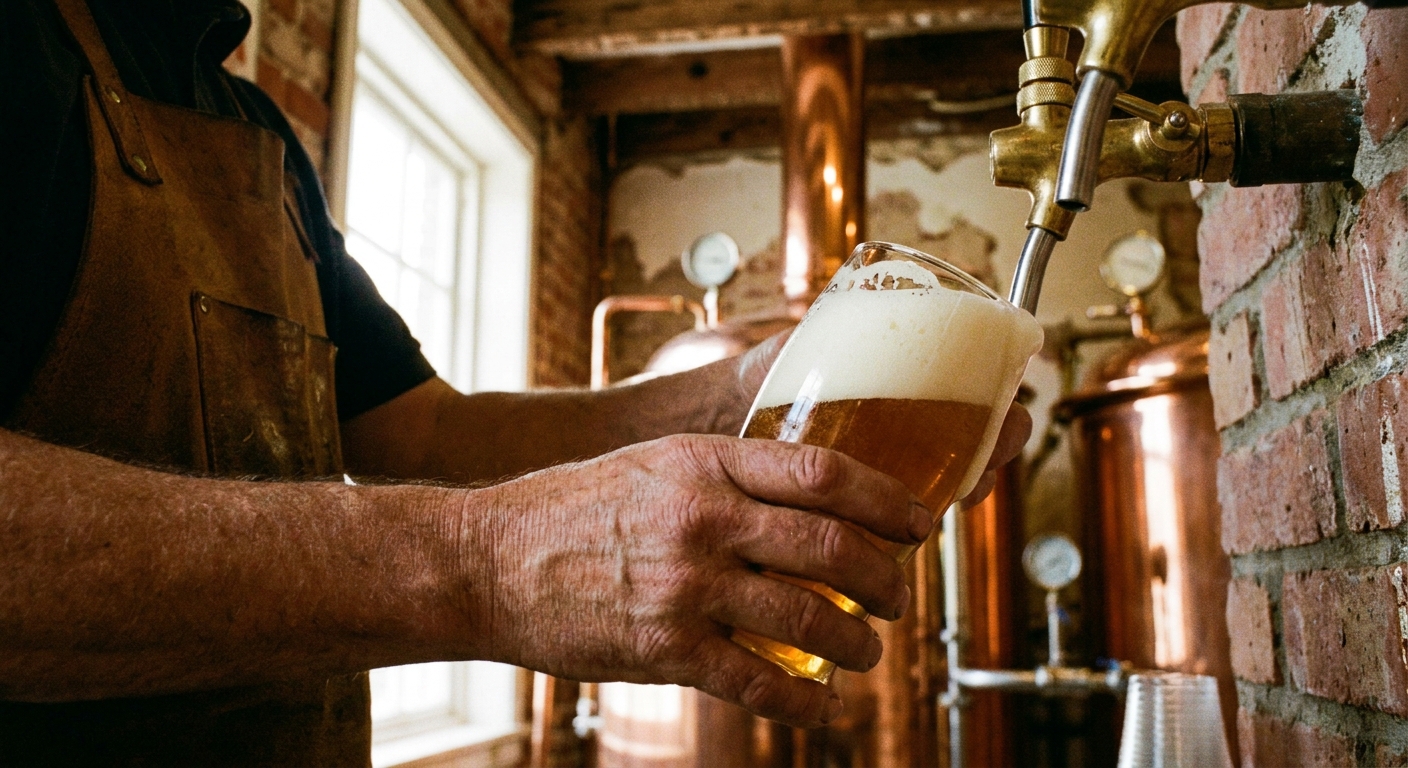
Start your walk at the epicenter, the corner of Ta Hien and Luong Ngoc Quyen. While the sheer noise here is part of the charm, the best strategy is to grab a single glass of bia hoi to acclimatize, then retreat just a few doors down to Standing Bar. This is a narrow, vertically oriented space that overlooks Truc Bach Lake’s vibe if it were condensed into a three-story tube. They rotate taps from local breweries like Pasteur Street and Furbrew. Order a flight here—it’s the best way to understand the nuance of tropical fruit notes in a Southeast Asian climate.
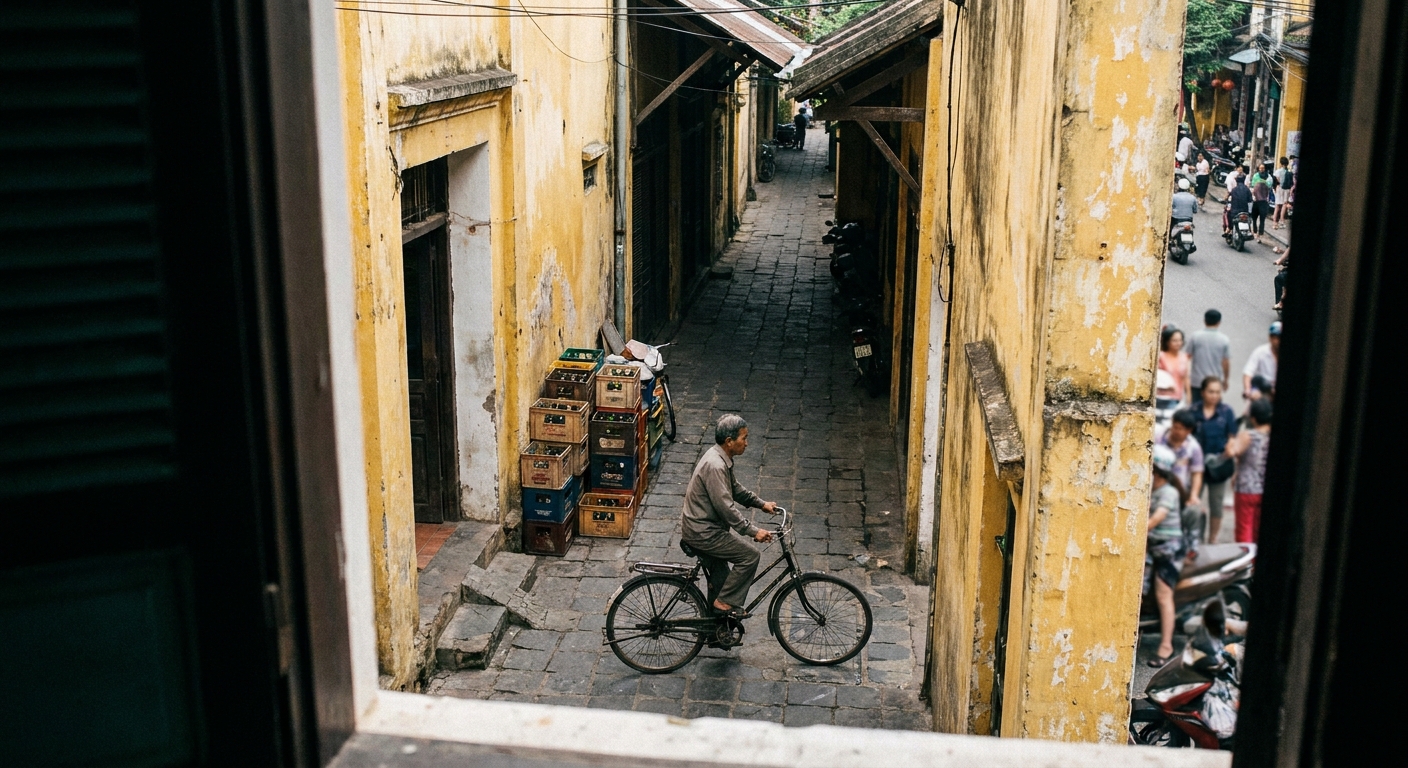
Once you’ve sampled the craft side, wander five minutes north to Turtle Lake Brewing Company’s satellite presence or seek out a tucked-away spot like Pasteur Street Brewing’s taproom near the cathedral. The contrast is jarring but welcome. At these craft establishments, the beer is served chilled but not over-iced, allowing the complex flavor profiles to emerge. As you drink, keep an eye out for the vendors patrolling with grilled pork skewers. Do not ignore the lady with the charcoal brazier. The smoky, fatty profile of the pork acts as the perfect palate cleanser for the bitterness of a double IPA. The salt and fat from the skewers are practically engineered to make that next sip of craft beer taste even sharper.
If you prefer a more communal, gritty atmosphere, head toward Dinh Liet Street, which serves as a slightly more spacious extension of the Bia Hoi corner. Here, you will find a mix of older locals who have been drinking in these same spots for decades alongside travelers who are just beginning their Vietnam itinerary. The price difference between the mass-produced daily draft and the boutique craft pints is significant, yet still a fraction of what you would pay in Western capitals. Keep these points in mind as you make your rounds:
- Arrive before 7:00 PM to secure a seat with a view of the street, rather than being relegated to the back of a crowded shop.
- Always keep your eyes on your motorbike helmet if you have one; despite the friendly atmosphere, the street is chaotic and items can vanish in the crush.
- Order the fermented peanut snacks or the grilled pork skewers to balance the acidity and alcohol of the beer.
- Pace yourself, as the humidity and the alcohol can hit much harder than they would in a climate-controlled pub back home.
The art of the crawl on Ta Hien Street isn’t about how much you consume, but how you balance the two worlds. You start with the traditional, local draft to settle into the rhythm of the street, then move to the craft taps to appreciate the modern evolution of the city’s nightlife. By the time you loop back to the main intersection, the crowd will be a roar of different languages and clinking glasses. As the night deepens, the boundary between the local experience and the global traveler’s perspective fades away, replaced by the simple, universal satisfaction of a cold drink in a city that never really sits still.
As you wander back toward your hotel, the intensity of the Old Quarter begins to soften. The neon signs above the beer shops start to flicker, and the charcoal fires from the skewers begin to dim. You realize that the appeal of the area isn’t just the quality of the brew, but the way the physical layout of these streets forces you to interact with your surroundings. You are never truly isolated in a bar here; you are part of a shifting, fluid landscape where the only constant is the arrival of the next glass.