The Vietnam e-visa is the superior choice for most travelers requiring a straightforward, pre-approved entry process at major international airports or land borders. Conversely, the visa on arrival remains a viable alternative for those who missed the e-visa window or require specific, complex entry support via authorized travel agencies.
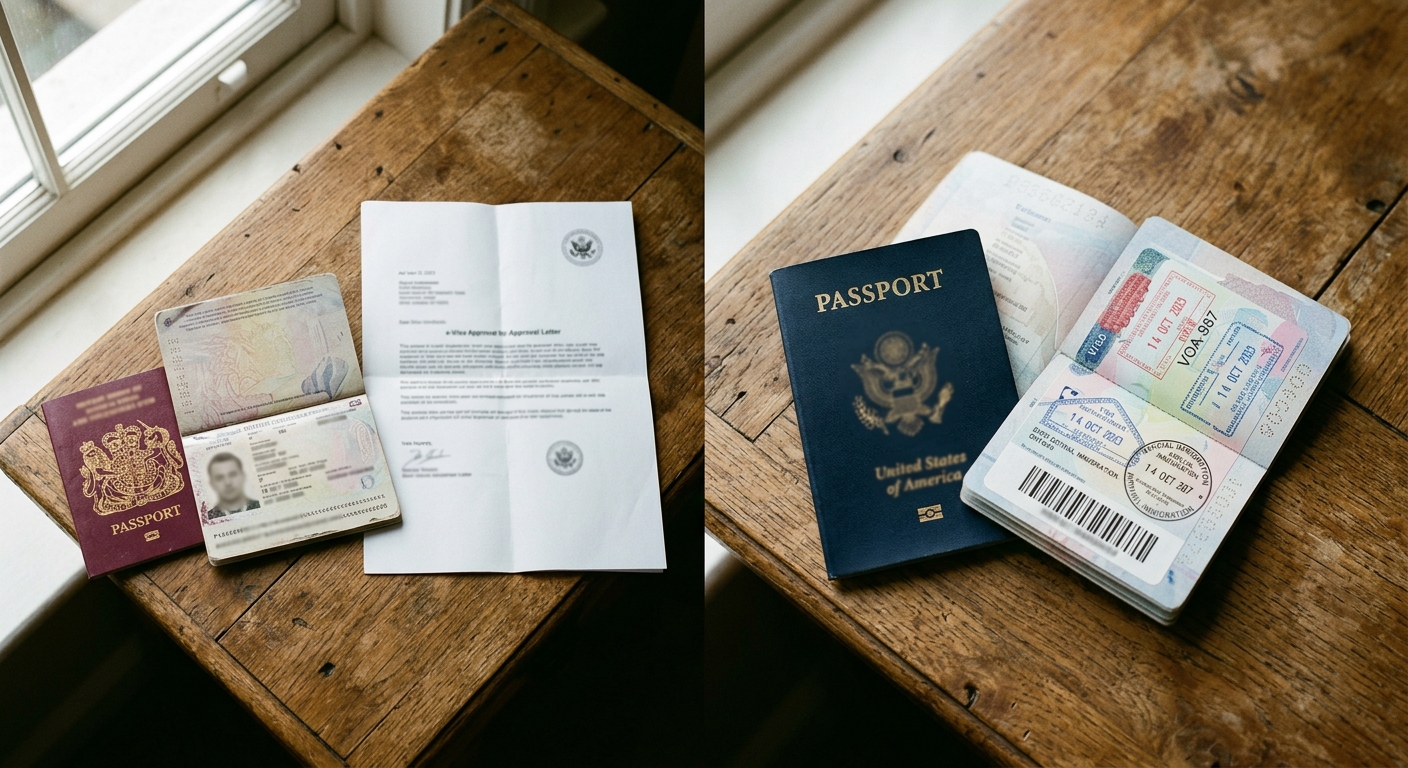
Vietnam E-Visa vs Visa on Arrival — quick comparison
| Dimension | Vietnam E-Visa | Visa on Arrival |
|---|---|---|
| Application channel | Applications are submitted directly through the official government immigration portal. | Applications are processed through authorized third-party travel agencies that secure a pre-approval letter. |
| Processing time | Standard processing takes 3-5 working days, though delays can occur during peak travel seasons. | Emergency service can provide a pre-approval letter in as little as 4-8 hours, while standard service takes 2-3 working days. |
| Total cost | The government fee is fixed at $25 for single entry or $50 for multiple entries. | Costs include an agency service fee plus a mandatory $25 USD cash stamping fee paid at the airport. |
| Where it works (port-of-entry) | Valid at 33 designated international checkpoints, including all major airports like Noi Bai and Tan Son Nhat. | Restricted exclusively to international airports: Noi Bai, Tan Son Nhat, Da Nang, Cam Ranh, and Cat Bi. |
| Pre-approval requirement | The e-visa serves as the final approval document; no additional letter is required. | A pre-approval letter issued by the Immigration Department is mandatory before boarding your flight. |
| Maximum validity | Available for stays up to 90 days with single or multiple entry options. | Available for stays up to 90 days, though most agencies prioritize 30-day or 90-day single/multiple entry requests. |
| Best for | Travelers who prefer direct government interaction and have at least one week before their departure date. | Last-minute travelers or those who face technical issues with the official government portal. |
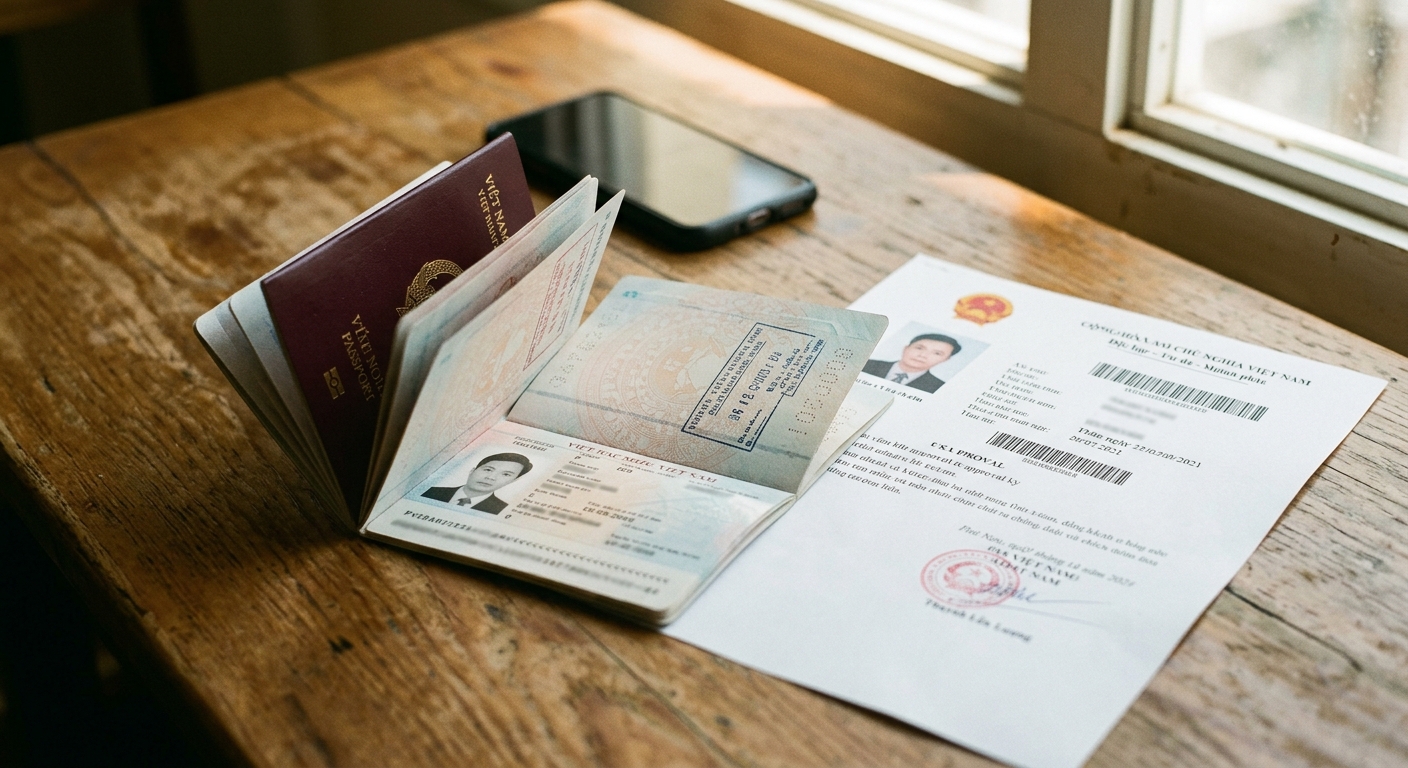
In 2026, the distinction between the Vietnam e-visa and the visa on arrival (VOA) centers primarily on administrative autonomy and flexibility. The e-visa is the government-mandated standard for most international arrivals. By applying directly through the official immigration portal, you bypass third-party intermediaries, paying only the government-set fee of $25 for single entry or $50 for multiple entries. This method is the most cost-effective approach for travelers who have finalized their itinerary at least one week in advance.
The visa on arrival is not a true ‘on arrival’ visa; it is a pre-arranged authorization process. You must secure a pre-approval letter from a local travel agency before your flight. Upon landing at one of the five designated international airports—Noi Bai, Tan Son Nhat, Da Nang, Cam Ranh, or Cat Bi—you present this letter at the visa counter to receive your official stamp. While this process involves an additional service fee paid to the agency, it remains the primary solution for emergency travel. If you realize your e-visa application was rejected or you have an urgent trip, agencies can often expedite the approval letter within a few hours, a speed the official government portal does not guarantee.
A critical factor in this comparison is the port of entry. The e-visa is accepted at 33 international checkpoints, including various land borders with Cambodia, Laos, and China, and seaports. If your travel plans involve crossing a land border, the e-visa is your only viable option. Attempting to use a VOA pre-approval letter at a land border will result in immediate denial of entry. Conversely, if you are flying into a smaller regional airport that is not on the list of 33, you may find that only specific visa types are honored, making it essential to verify your exact point of entry against the current government list before finalizing your application.
Common mistakes often stem from minor data entry errors. The official e-visa portal is notoriously sensitive; even a single digit transposed in your passport number or a discrepancy in your name order can invalidate the document. Because the e-visa is a direct government filing, correcting these errors often requires submitting a new application and paying the fee again. With the VOA, travel agencies often review your documents for basic errors before submitting them to the Immigration Department, providing a buffer that can prevent entry issues at the airport.
Cost realities also shift depending on the volume of travelers. For a solo traveler, the e-visa is almost always cheaper. However, for large groups, the combined service fees for VOA might be offset by the convenience of having an agency handle the bulk processing. Regardless of the method chosen, always ensure your passport has at least six months of validity remaining from your date of arrival. In 2026, immigration officers are strictly enforcing this rule, and both e-visa holders and VOA applicants will be denied boarding at their origin if their passport expiration date is too close to their travel date.
Frequently asked questions
Is the Vietnam e-visa cheaper than visa on arrival?
Yes, the e-visa is generally cheaper because it involves only the flat government fee of $25 or $50. The visa on arrival requires an additional service fee paid to a private travel agency, plus the mandatory $25 stamping fee that must be paid in cash upon arrival at the airport.
Can I get visa on arrival without a pre-approval letter for Vietnam?
No, it is impossible to obtain a visa on arrival without a pre-approval letter. This document must be secured from an authorized agency before you depart for Vietnam. Without this letter, airlines will deny you boarding, and immigration authorities will not permit you to enter the country upon your arrival.
Which ports of entry accept the Vietnam e-visa?
The Vietnam e-visa is accepted at 33 designated international checkpoints across the country. This includes all major international airports, such as Noi Bai in Hanoi and Tan Son Nhat in Ho Chi Minh City, as well as various land border crossings with neighboring countries and several international seaports for cruise ship passengers.
What happens if I land at a non-international port with only an e-visa?
If you arrive at a port of entry that is not listed as an approved checkpoint for your specific e-visa, you will be denied entry. You must ensure your exact point of arrival matches the port specified on your e-visa document, or you will be required to depart the country immediately.
Is the e-visa or VOA faster for emergency travel to Vietnam?
The visa on arrival is faster for emergency travel. While the e-visa takes 3-5 working days, specialized travel agencies can secure a pre-approval letter for a visa on arrival in as little as 4-8 hours, allowing you to board a flight to Vietnam on the same day you initiate the request.